
A precious metal with a practical job
When people picture Apollo, they usually think of the Saturn V rocket, the astronauts, or the computers that guided them to the Moon. Less visible was silver, working inside batteries at some of the mission’s most demanding moments.
Silver-zinc batteries supplied the Lunar Module’s onboard electrical power, supported the Command Module during its return through Earth’s atmosphere, and later drove the lunar rover. During Apollo 13, battery reserves became part of the electrical lifeline that helped bring three astronauts home.
The important qualification is that Apollo used several power systems. Understanding where batteries fitted into that design makes silver’s contribution more remarkable, without overstating it.
Apollo had more than one power source
The Service Module carried three hydrogen-oxygen fuel-cell powerplants. These supplied the Command and Service Module during normal flight and produced water that could be used by the crew. Silver-zinc batteries complemented that system rather than replacing it.
The Command Module carried three main storage batteries for entry and postlanding operations. They could be recharged in flight and could supplement the fuel cells during demanding periods. Two separate batteries supplied the pyrotechnic circuits used for events such as separation and parachute deployment.
The distinction matters: a count of three describes the main entry batteries, not every battery aboard the spacecraft. NASA’s Apollo 11 press kit explains these separate roles.
Why silver belonged in a battery
A silver-zinc cell combines a silver-oxide positive electrode with a zinc negative electrode and an alkaline electrolyte. NASA’s energy-storage assessment describes potassium hydroxide as the electrolyte in this chemistry, with separators keeping the electrode materials apart.
Silver’s role extends beyond conducting electricity. The silver-containing electrode participates in the chemical system that stores and releases energy. That is different from using silver only as a wire, contact, or coating.
For spacecraft designers, compact energy storage and strong power output were valuable. Every battery had to fit a strict mass and space allowance while supplying the loads required by the mission.
Performance came with trade-offs
Silver-zinc chemistry was not a universal answer. NASA’s account of its battery research describes persistent problems with electrode deterioration and rechargeable cycle life. Improving separators and manufacturing methods became an important part of the development effort.
The mission profile therefore mattered as much as the chemistry. A battery intended for a limited flight had different priorities from one expected to be charged every day for years. The Lunar Module used primary, single-discharge main batteries; the Command Module’s entry batteries were rechargeable but designed for relatively few cycles.
That distinction also avoids another oversimplification: saying that all Apollo silver-zinc batteries were either disposable or routinely rechargeable.
Independent power for landing and return
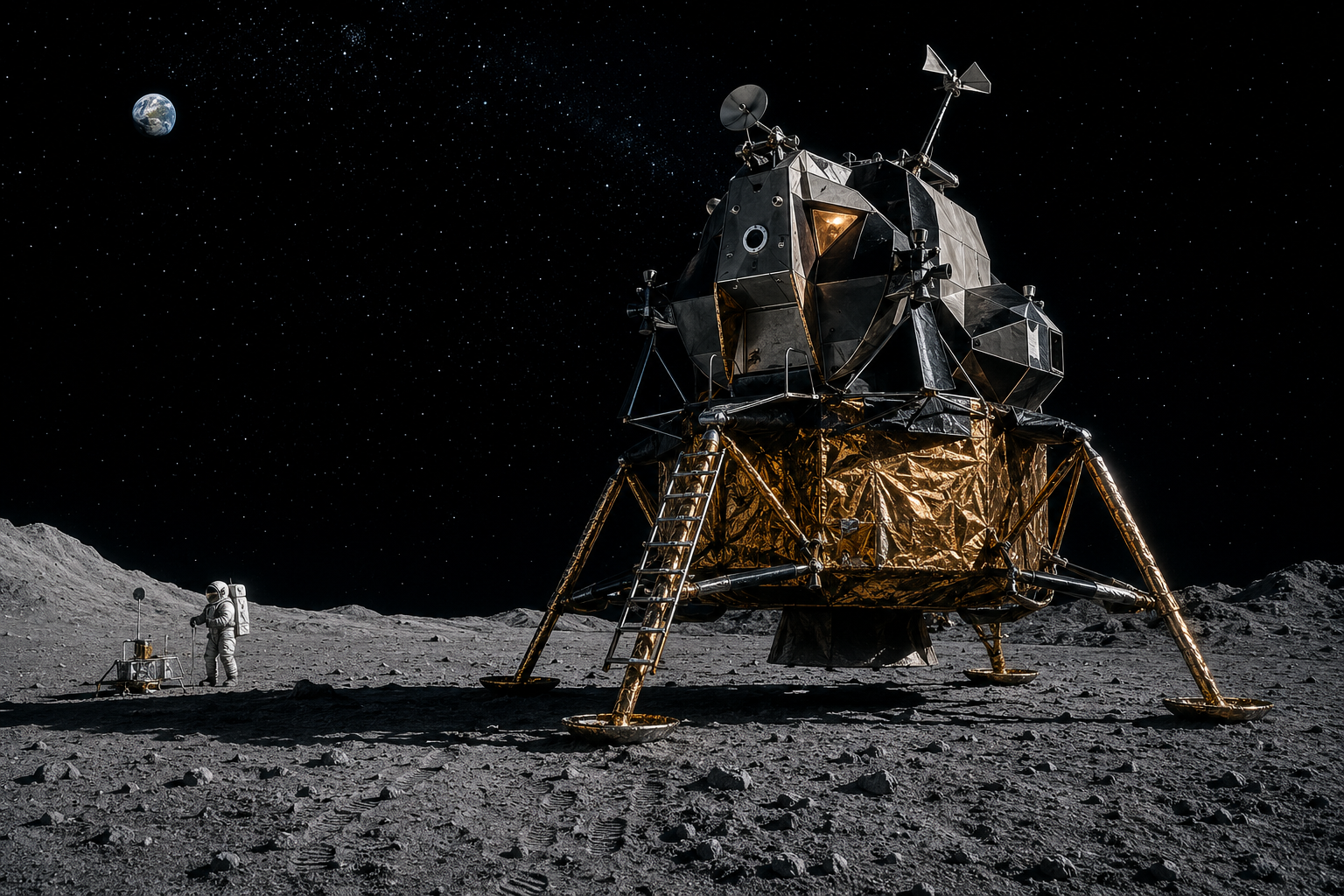
Apollo 11’s Lunar Module had four main batteries in its descent stage and two in its ascent stage. These supplied the electrical systems needed for the independent lunar landing mission. Separate batteries served its explosive devices.
The Lunar Module could receive power from the Command and Service Module while connected during parts of the journey. Once operating independently, however, it depended on its onboard batteries. The ascent-stage batteries remained with the cabin that carried the astronauts back toward rendezvous.
The Command Module faced its own moment of independence near Earth. After the Service Module was discarded, its batteries supplied electricity through entry and after splashdown. The fuel cells could no longer help because they had departed with the other module.
Apollo 13: conserving every reserve
After Apollo 13’s oxygen-tank accident disabled the normal fuel-cell supply, the crew shut down the Command Module and used the Lunar Module Aquarius as a lifeboat. Equipment was turned off to stretch the available electricity and other consumables.
NASA’s mission report records roughly 2,180 ampere-hours available in the Lunar Module batteries at power-up and about 410 ampere-hours remaining at undocking. Ampere-hours describe electrical charge capacity, not power. Ground teams also worked out how to use Lunar Module electricity to recharge the Command Module’s entry batteries.
Those reserves mattered enormously, but batteries alone did not save the mission. The return depended on the crew, controllers, life-support systems, navigation, propulsion, and careful decisions about which equipment could remain off.
Silver on wheels, and a lesson for collectors
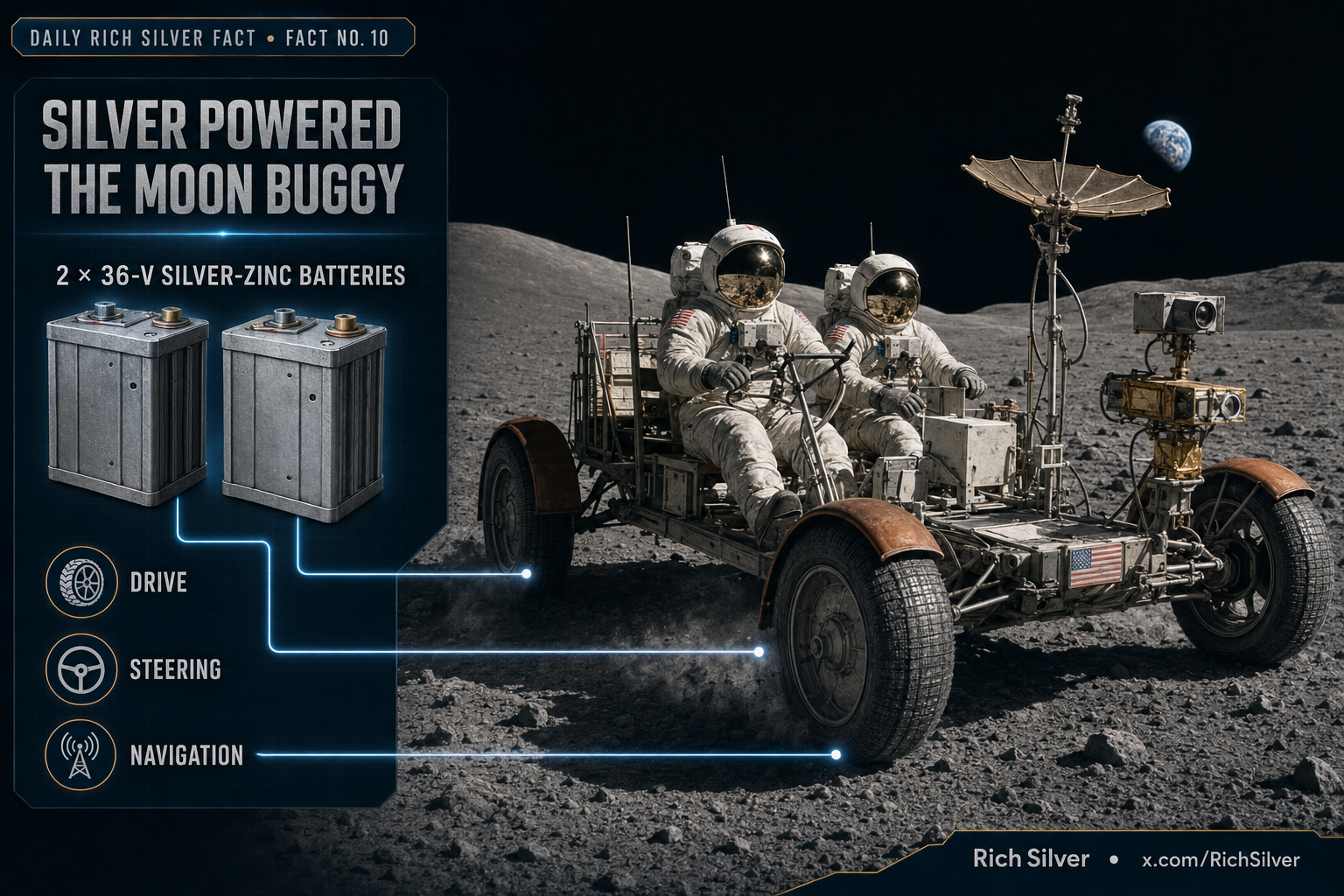
The Lunar Roving Vehicles flown on Apollo 15, 16, and 17 extended the astronauts’ reach across the surface. Each used two non-rechargeable, nominal 36-volt silver-zinc batteries. NASA’s rover overview lists a capacity of 121 ampere-hours per battery and describes their role in powering propulsion, steering, and communications equipment.
For silver collectors, Apollo is a memorable example of practical utility. It is not evidence for a future silver price or a particular level of investment demand.
Nor should the weight of a complete battery be mistaken for its silver content. Zinc, electrolyte, separators, cases, and other components also contributed mass. Any precise claim about how much silver a mission carried needs a mission-specific inventory. The defensible conclusion is already impressive: silver chemistry earned a place in equipment that helped people travel to another world and return.
About this edition
Original source and editorial notes
Adapted from original material by Rich Silver. Original publication: The Silver Batteries That Helped Carry Apollo to the Moon ↗ (2026-07-25).
Reviewed 2026-11-04. Adapted from Rich Silver’s original article and checked against NASA mission documents and technical histories. Clarified the separate main and pyrotechnic batteries, the distinction between rechargeable Command Module batteries and single-discharge Lunar Module batteries, and the Lunar Module’s use of spacecraft power while docked. Apollo 13 reserve figures are rounded because NASA’s retrospective and mission report give slightly different initial totals. No total silver weight or investment forecast has been added. The recovered artwork is labelled as generated illustration rather than historical photography.
Sources & further reading
- NASA: Apollo 11 lunar landing mission press kit (1969) ↗
- NASA: Apollo Experience Report — Battery Subsystem (1972) ↗
- NASA/JPL: Energy Storage Technology for Future Space Science Missions, section 2.2.2 (2004) ↗
- NASA: Research Helps Take Silver-Zinc Batteries from Idea to the Shelf (2016) ↗
- NASA: Apollo 13 Mission Report, section 7.2.5 (1970) ↗
- NASA: The Apollo Lunar Roving Vehicle ↗