
Two lids, one sea
The Met’s 18th-century snuffbox looks like a gilded silver object from above and a spiral shell from the side. Follow the metal rim and you find two hinged lids, not one. The maker mounted the openings of a cut green turban snail shell in silver, making two compartments. The sea pictured on their lids came from a sheet of paper.
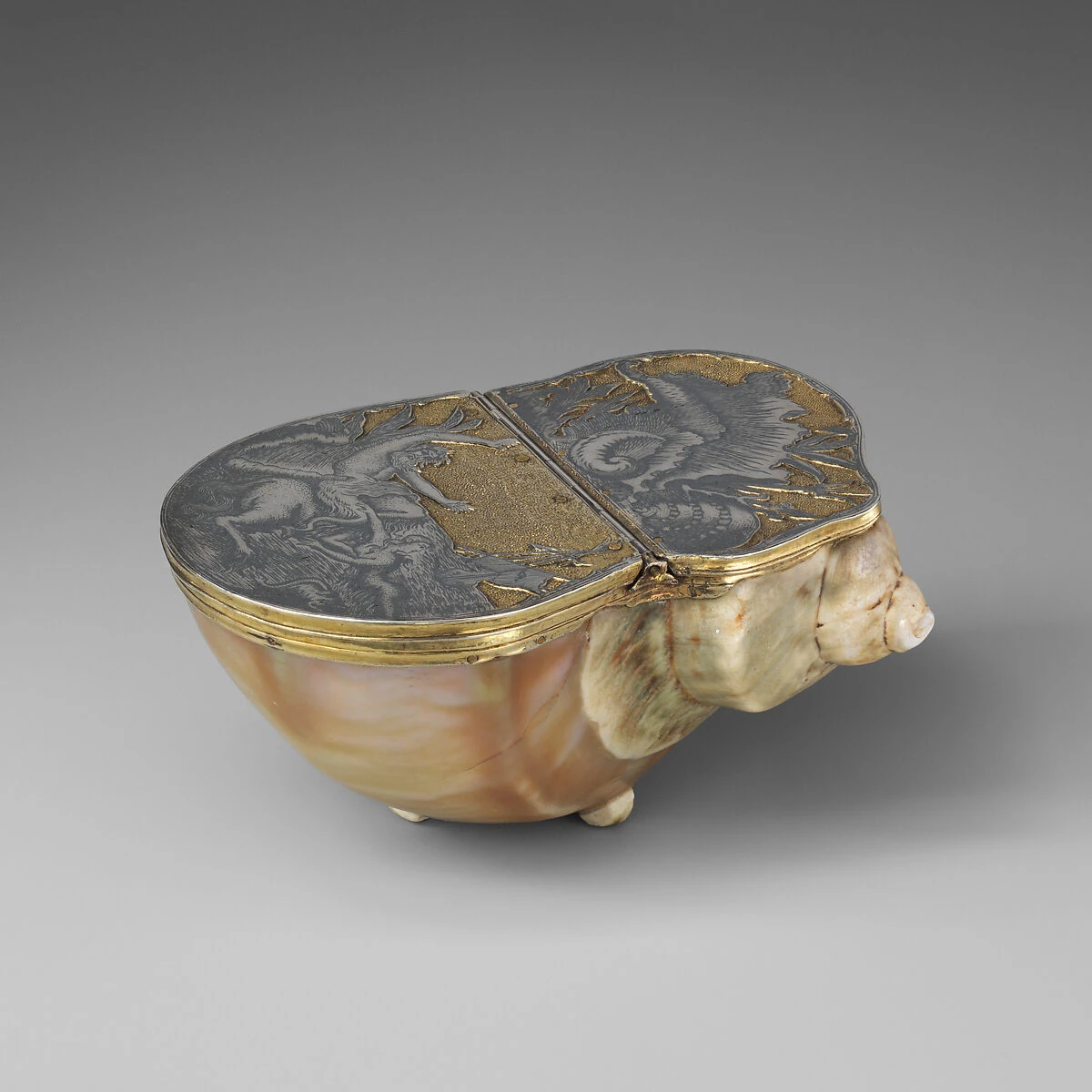
What survived the trip from paper to silver
In his study of the box and its relatives, Met curator Wolfram Koeppe traced the scenes to Naufrage, or Shipwreck, a design by Jacques de Lajoüe published in Paris in 1736. The Met’s surviving pattern-book spread puts the image next to its mirror reflection. Even the word Naufrage reads backward on one side. That made the page useful for more than copying a whole picture: a craftsperson had details facing either way.
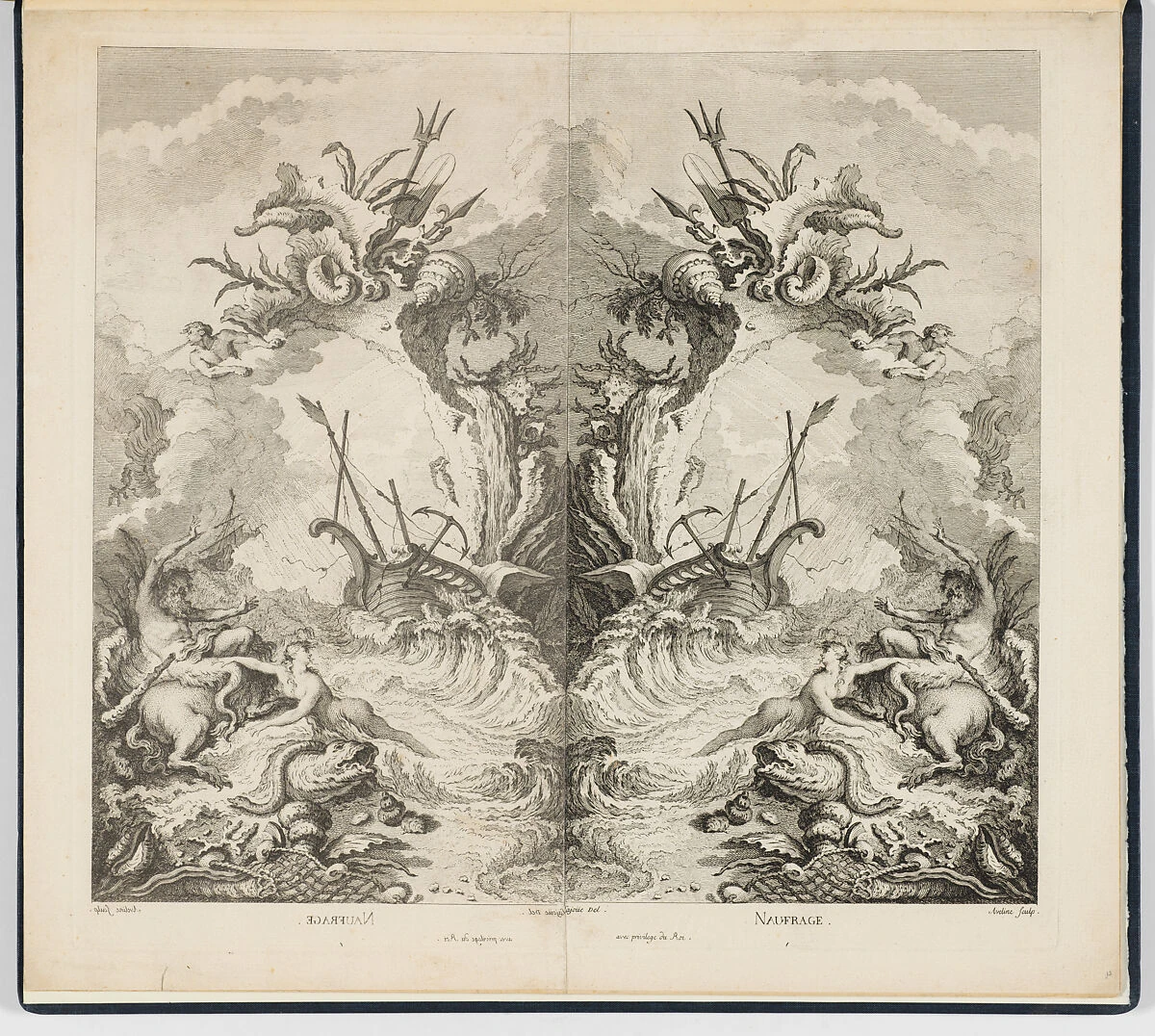
The box uses parts of the scene. The ship in distress and the mythological figures have to fit round, unequal surfaces, with room for the hinge and rim. Seen from directly above, the scene changes at the join between the two lids. Koeppe’s work is a reminder to compare the parts of a picture instead of expecting the whole print to match. The right clues may be a bend in a wave or the way a figure turns, not the outline of the scene.
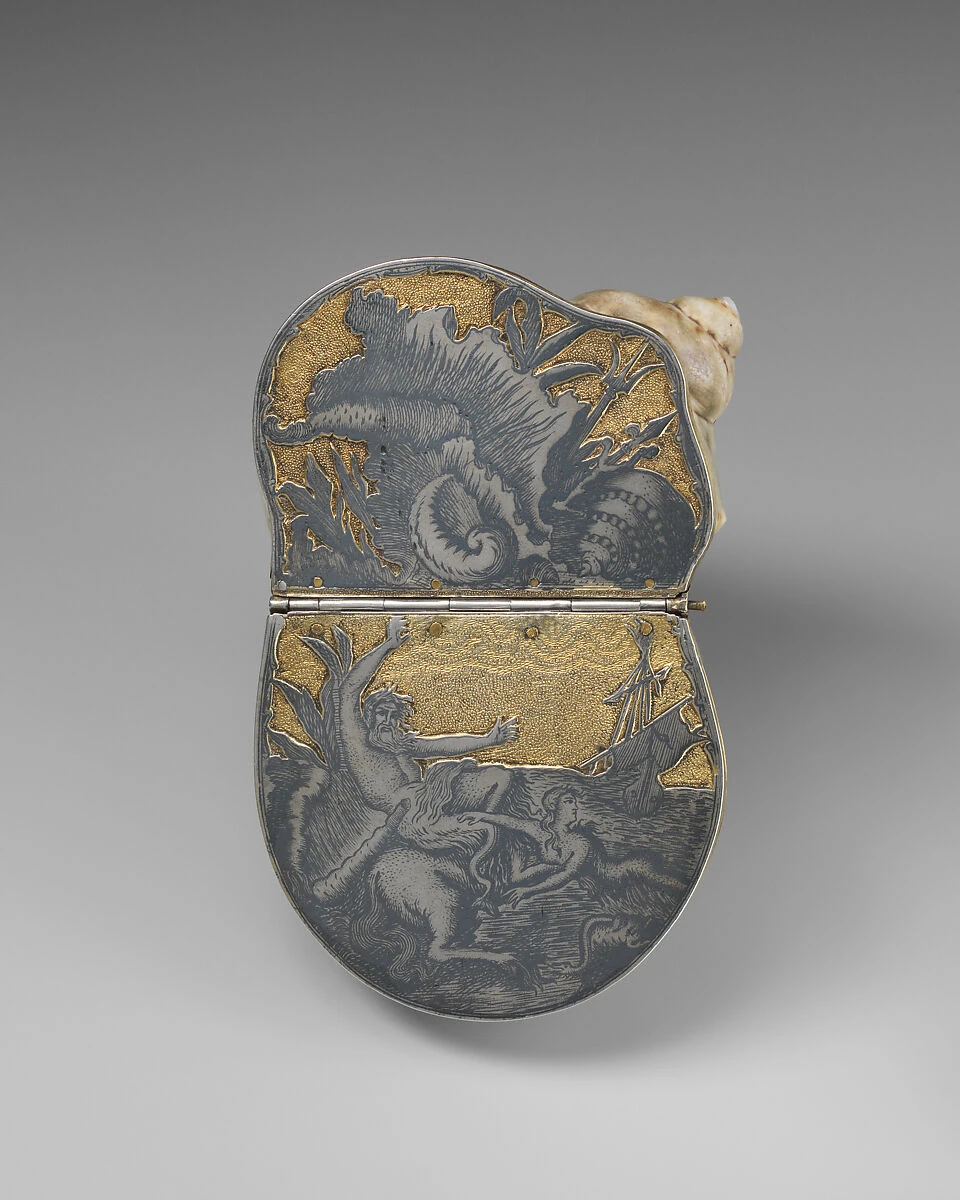
The dark lines are part of the design
The museum identifies the decoration as niello, a dark material worked into recesses in the metal to create the image. Here it gives the dark design contrast against the gilded silver. That is different from deciding a dark patch is tarnish just because the object is silver. A pattern that follows deliberate contours is a reason to stop and examine it, not a test by itself. Don’t strip, polish or scrape an unidentified dark surface to make it look even. Compare clear light and angled photos of the lid, underside, hinge and interior; start with the Collect Silver care guide if the surface is unfamiliar.
A history with gaps
The Met points to related turban-shell boxes with Chinese inscriptions. Those comparisons are evidence of a broader trade and an earlier use of such shells as wine cups, not a complete travel record for this exact shell. The French print’s date does not date the box to 1736, and the probable Russian making place does not tell us who supplied the shell. A good description keeps the material, the source of the picture and the place the object was made separate.
The snuffbox and vinaigrette guide shows how the lids and compartments can help identify other small boxes. For another way a silversmith joined shell and metal, see the Gujarat mother-of-pearl vessels.