
A prize for floral design
At a fair in Macon in October 1851, Mary Anne Hammond Washington won a silver cup for floral design. The design itself is not recorded here. The cup has its own pair of flowering stems worked in relief, with space between them for her initials, surname, and the award. It is only three inches high. If you saw it upright in a cabinet, you could learn who won it and when without seeing the mark that tells you what kind of silver it was meant to be.
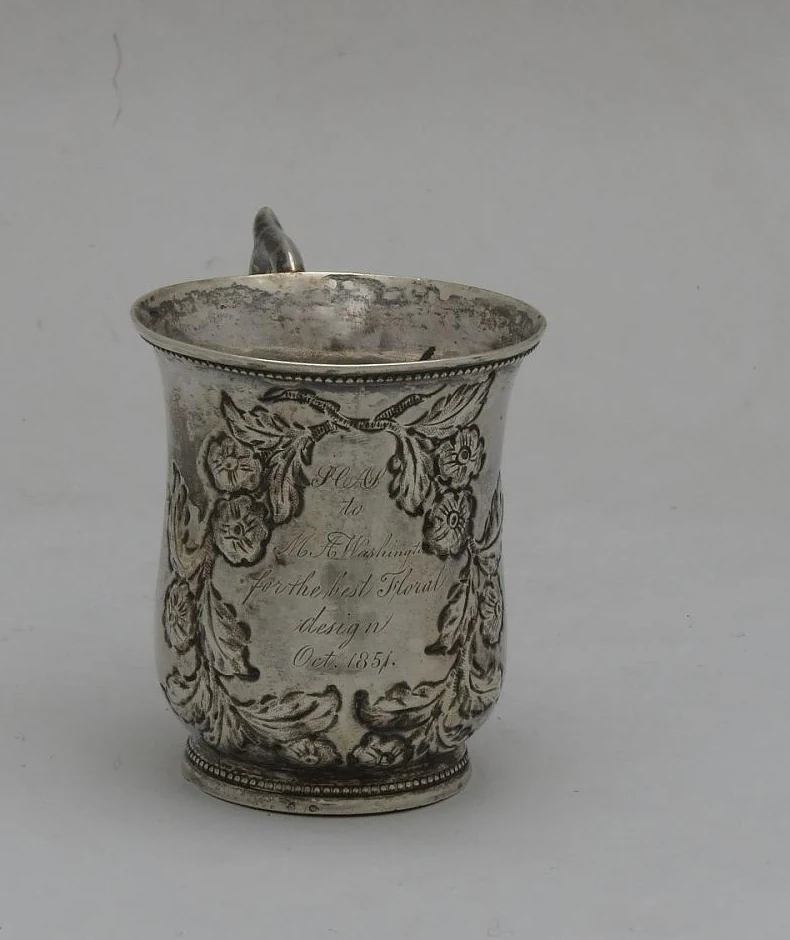
The fair was held by the Southern Central Agricultural Society. An account preserved by the University of Georgia Press describes a horticulture program and records silver cups among the prizes. The surviving account and the object do different jobs. The fair record shows how silver fit into the event. Washington’s own cup supplies the award wording, month and year. It does not tell us which flowers she used, what her design looked like, or what the cup cost.
Why “PURE COIN” does not mean pure silver
Turn the cup over. Between scraps of an old paper label is a triangular stamp, transcribed by the Smithsonian as PURE COIN. There is no maker’s mark reported on this cup. The number written in ink is a collection identifier, not a fineness number.
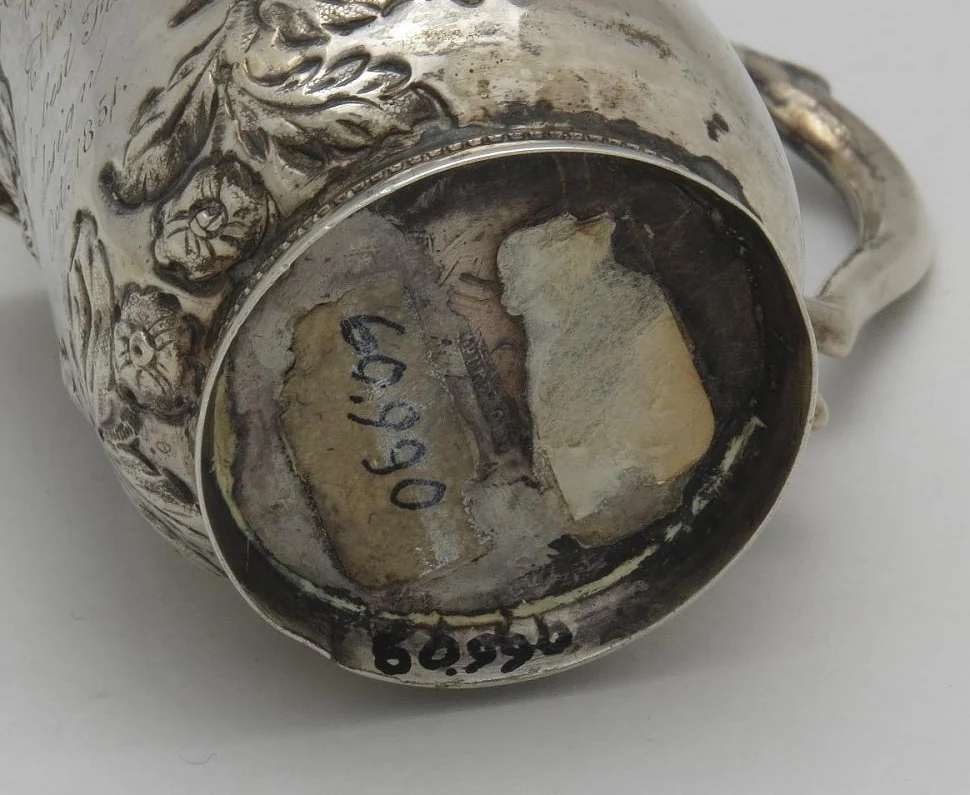
In this context, coin silver was an alloy, generally about 90 percent silver in nineteenth-century U.S. work. There is a numerical reason for the term: the federal Mint act of 1837 set U.S. silver coinage at 900 parts silver and 100 parts copper. That provision governed coinage, not the manufacture or testing of this cup. Some smiths did melt coins for their metal. As the Winterthur conservation team explains, the coin marking also remained in use when shops bought sheet silver instead. The letters cannot tell you which happened here. Nor has the museum record supplied a measured silver percentage for the cup.
An easy distinction to remember: about 900 parts per thousand describes the customary alloy; “made from melted coins” is a claim about where the metal came from. The latter requires its own evidence. Neither is the same as elemental silver.
The other cup has a New York address
A later silver mug belonged to the same woman. Its base is much easier to read. A curved line says ENGLISH STERLING above 925-1000, which conveys 925 parts silver per thousand, or 92.5 percent. The base also has two G & W marks and an impression with Tiffany’s name and 550 Broadway. The museum dates this mug to 1854–1865, catalogs it as made in New York City, and names Tiffany as the retailer. “English” here is part of the stated standard, not evidence that the mug crossed the Atlantic. The Tiffany mark is a shop trail, not a reason to call every punch on the mug Tiffany’s maker mark.
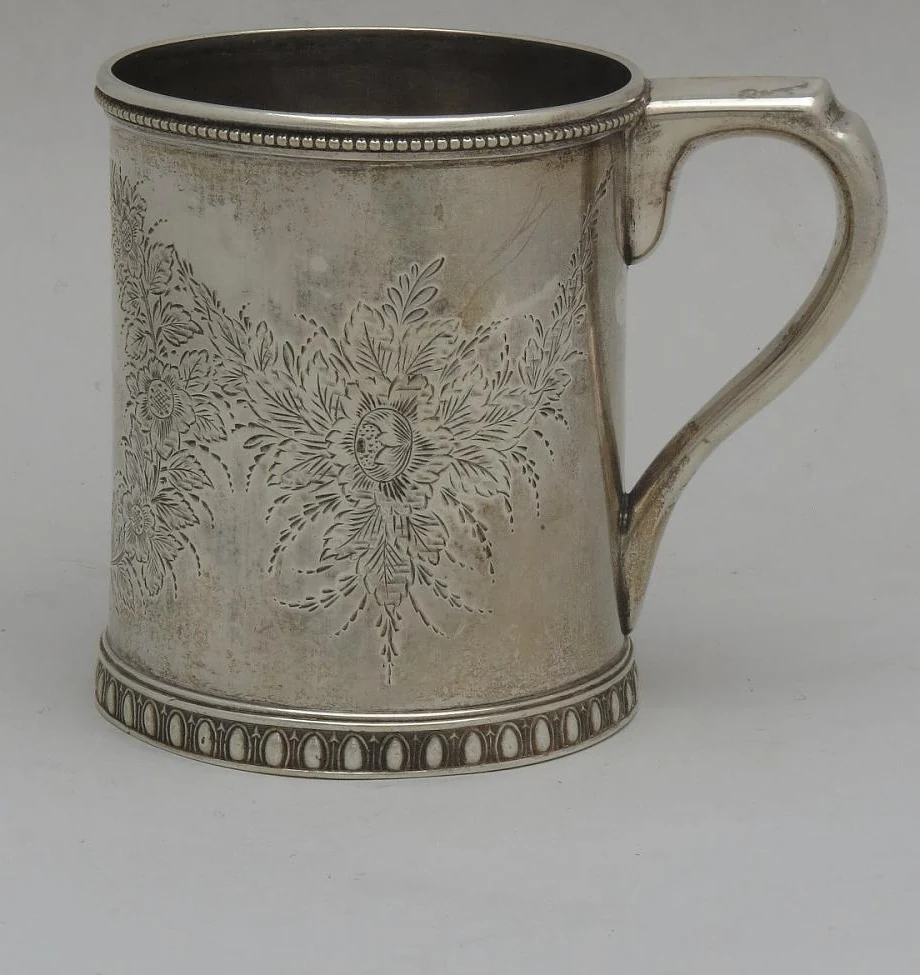
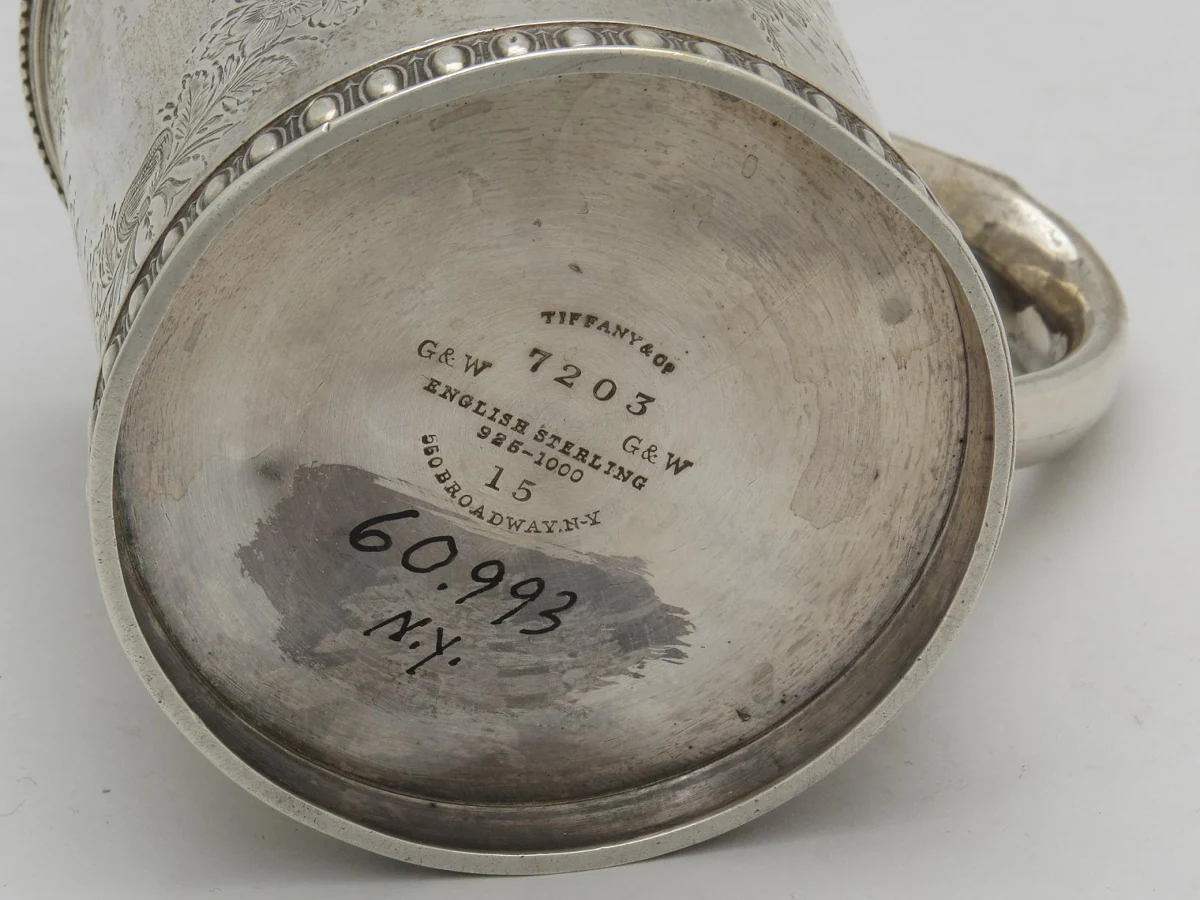
The catalog does not identify the maker. The New York Historical owns a separate child’s mug with a comparable arrangement of marks and attributes its manufacture to Grosjean & Woodward. It is a useful parallel for someone reading G & W, not a substitute for attribution of Washington’s mug.
If you have a piece marked COIN
Photograph the whole piece and its base. Use angled light to catch shallow letters and copy the punches separately, including their spelling, shapes and positions. Record an engraved name or date separately from the struck marks. For a collector, the distinction is practical: a name can be an owner, maker, or seller, while a numeral may be a fineness, model number, or inventory mark. A stamp is a clue to look up, not a test result. Avoid polishing away patina or scratching an object just to make one mark easier to read. If composition matters for value or treatment, ask an experienced specialist about appropriate non-destructive examination and its limits. A photo can make the clues clear; it cannot put a number on the unseen metal.
Keep reading
- The Silver Table follows the forms and uses of silver at the table.
- Silver identification and hallmarks explains who put different kinds of marks on objects.
- The Denver Quarters With Too Much Silver shows what evidence from a documented assay looks like.