
The plates in the safe
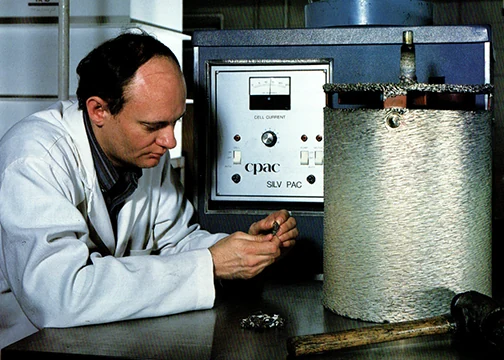
In the basement of a South Dakota photo lab, workers used to put metal plates in a safe. They weren’t negatives, and they held no pictures. They held silver. Brent Nelson, who worked at the Earth Resources Observation and Science Center near Sioux Falls, remembered the plates growing heavy after repeated runs. Staff set them aside to dry, then removed the silver under security, weighed it and put it up for auction. Nelson’s USGS oral history.
The photographs upstairs could show a whole city or a stretch of the Mississippi. The silver downstairs was a by-product of making copies people could hold. The connection wasn’t in orbit. It was in the darkroom.
A satellite picture on paper
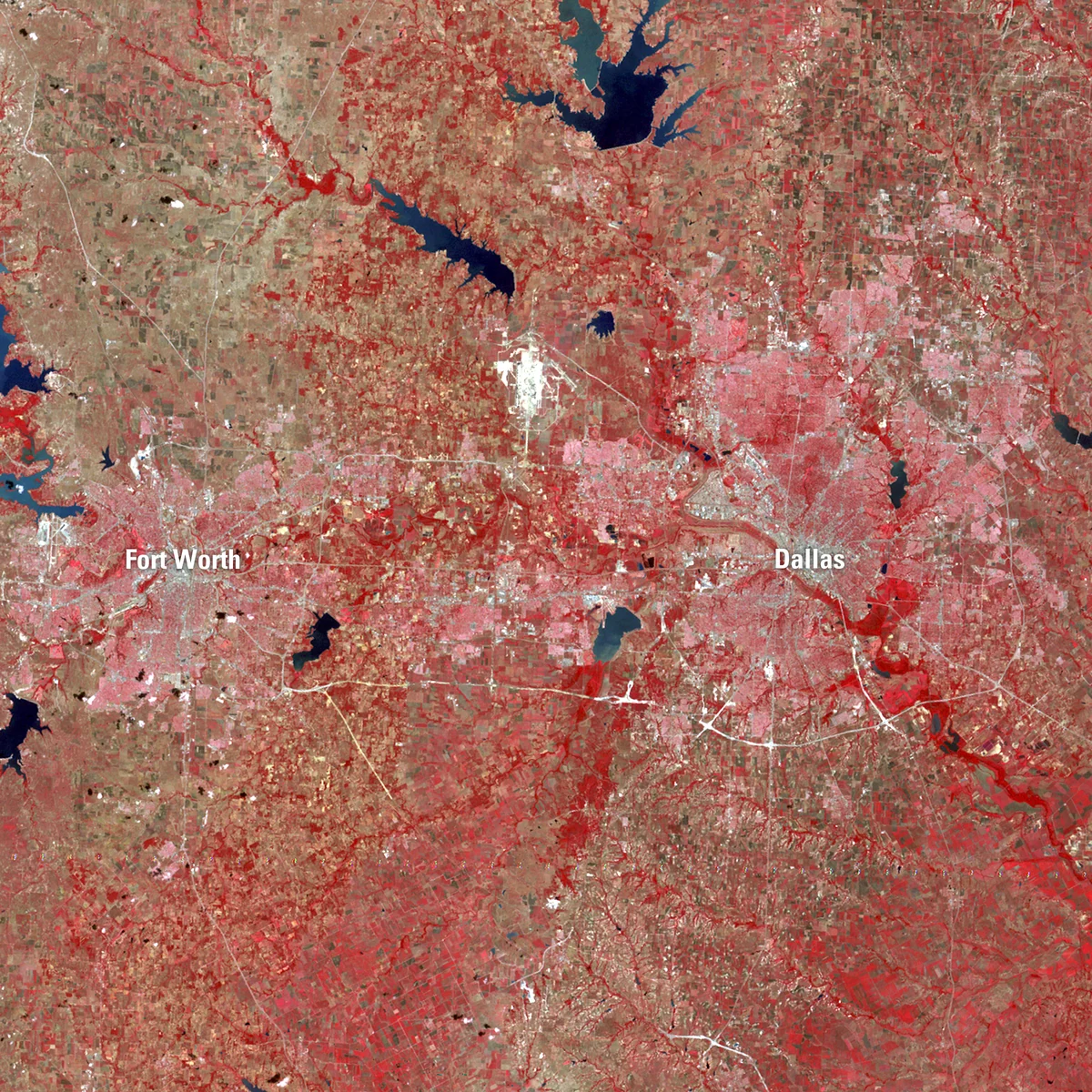
On July 25, 1972, the first scene in the Landsat archive looked down on Dallas and Fort Worth. In the USGS rendering, vegetation appears red. The city names are printed in white on the reproduction. The scanner’s data reached the ground electronically; no roll of camera film came back with the picture. NASA’s Goddard Space Flight Center converted early Landsat data to film, and EROS duplicated and distributed imagery. The film and paper were part of getting the image to its audience, not part of getting it down from space. USGS Landsat film archive.
What the fixer carried away
In a silver-based photograph, fixing takes away silver compounds that did not form the image. The print leaves the lab with the image intact; the silver removed in fixing goes down a different pipe, dissolved in the used liquid. That distinction connects this story to silver in historic photography. Henry Draper had needed photosensitive silver to register his picture of the Moon. The staff at EROS had a different problem: what to do with the silver that didn’t stay in the picture.
At EROS, used fixer went to the basement. Electrical current brought dissolved silver out of the solution and onto removable metal plates called cathodes. The lab could then check and replenish the fixer rather than discarding it after one use. Nelson remembered some batches going back into service 50 times or more. A 1976 EPA study, printed pp. 74–77, describes electrolysis in several processing streams at EROS. The cathodes were a way to turn one kind of dissolved waste into a metal staff could handle and sell. They were not the entirety of the lab’s wastewater treatment.
A number with a boundary
In 2003, the ground lab collected about 150 troy ounces of silver per month, roughly 4.7 kilograms, from waste photographic chemicals, according to a facility estimate recorded in a 2004 USGS report, printed p. 2. The report says 99 percent of that silver was recovered and sold. That is not the purity of the metal, a measure of all silver used at EROS, a tally exclusive to Landsat, or a claim about how much silver remained in the rest of the wastewater. The record doesn’t follow auctioned silver to its buyers or their finished products.
The USGS 2004 annual report says it stopped offering photographic products on September 3 of that year. Satellite pictures kept coming. The basement story belongs to the years when seeing one often meant making another print. Most people who looked at those pictures never saw the silver that didn’t make it into them. At EROS it had a paper trail of its own.
For the bigger picture, see where recycled silver came from in 2025.