
A house with more than one date
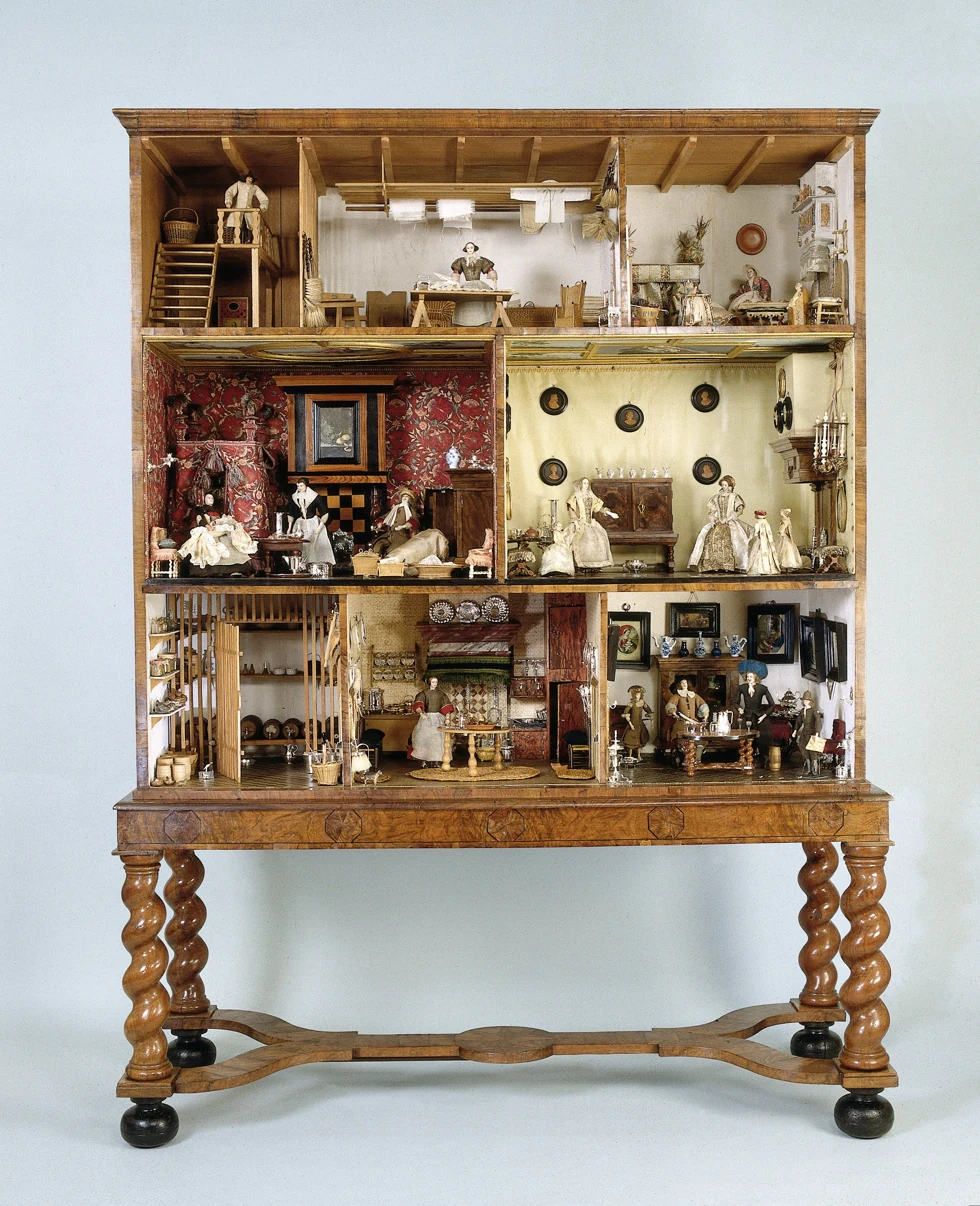
Open the tall wooden cabinet and you can look into a kitchen, a nursery and a dining room at once. The Rijksmuseum dates the dolls’ house made for Petronella Dunois to about 1676, in part because several of its objects carry that year. But look closely at the dates on the silver furnishings and the house is not entirely what it was when Dunois knew it. One little ewer is dated 1750. A silver pipe brazier is dated 1755. Both were made after her death in 1695.
The cabinet’s date and the silver dates do not contradict each other. They date different things. The Rijksmuseum traces the cabinet through later owners before it arrived in 1934. Its two later silver pieces are part of the current ensemble; the available records do not tell us who put them there or when. A family inheritance can change even when its case stays the same.
Three pieces and three different kinds of evidence
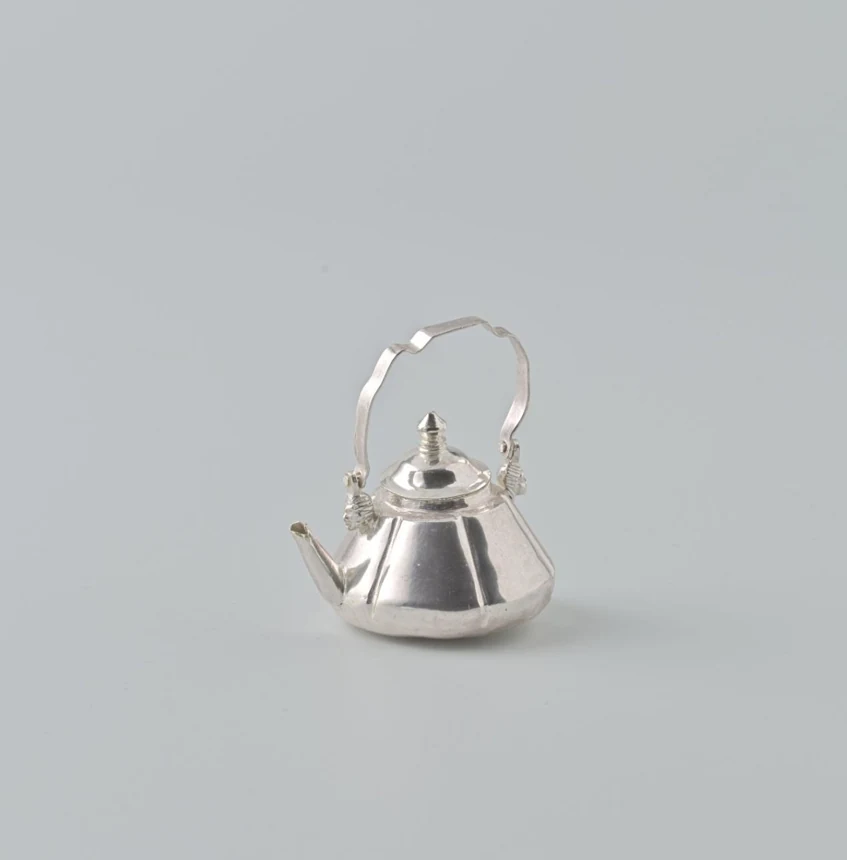
The silver kettle is four centimeters high, with a hinged handle and a lid. The Rijksmuseum dates it to 1675–1700 and lists Amsterdam or Haarlem as possibilities. It could belong to the same period as the early cabinet, but a date range that overlaps 1676 is not proof that the kettle was in the house from the start.
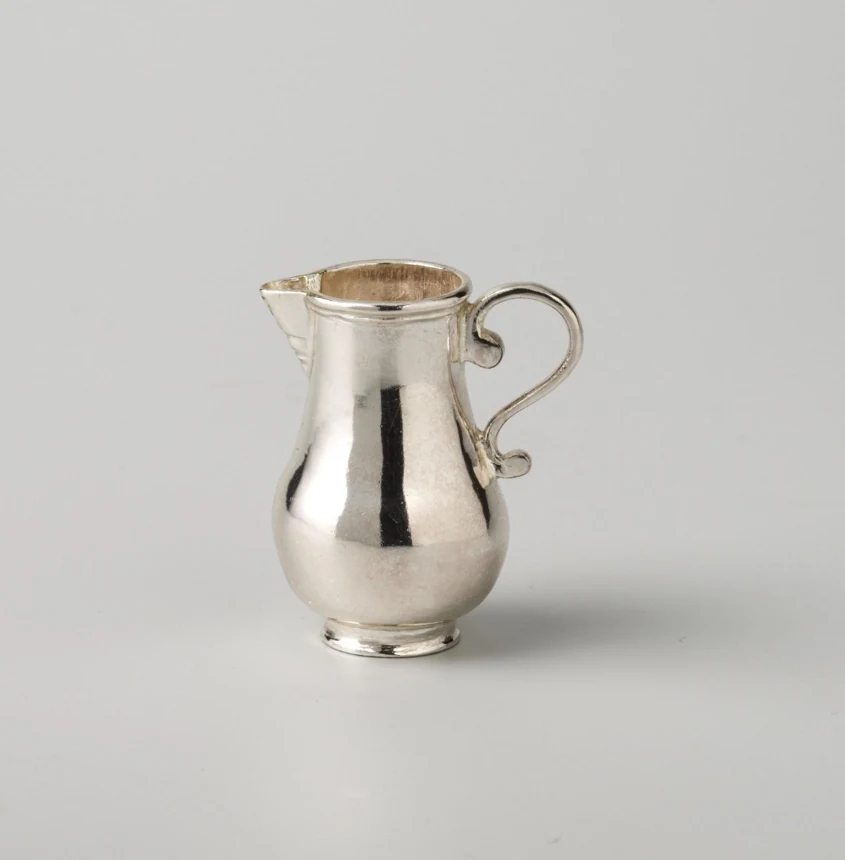
The little ewer is also only four centimeters high. Its catalog entry names Daniël van Strant in Amsterdam and transcribes three clues: the small Amsterdam town mark, his DVS maker’s mark, and Q, the date letter the museum reads as 1750. Think of those as three labels answering three different questions, not as one stamp that does all the work.
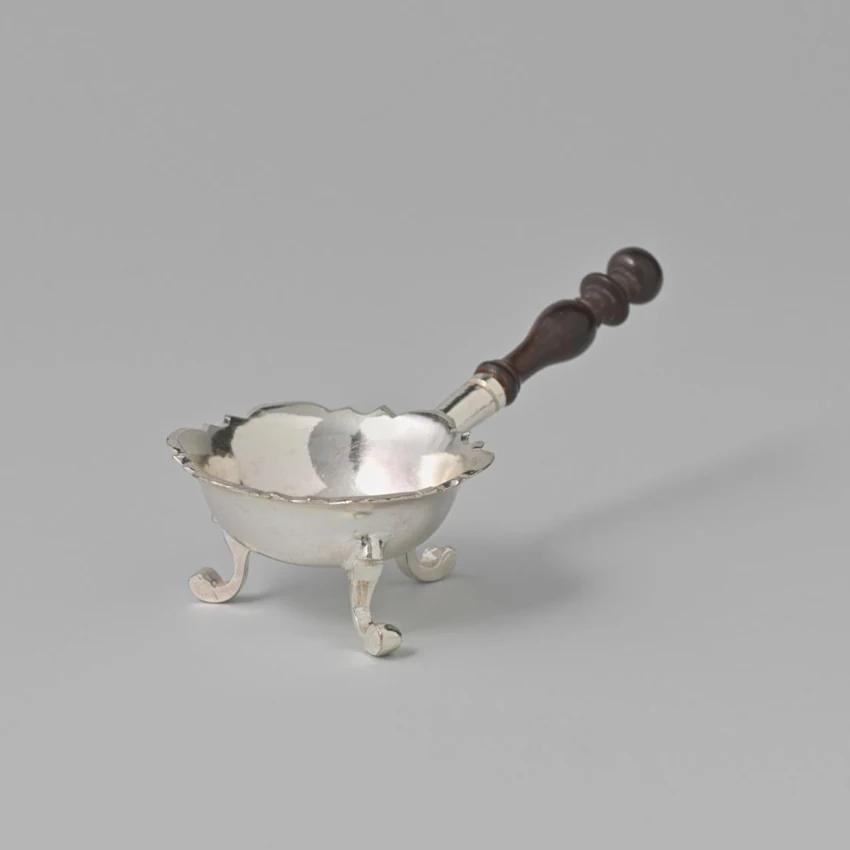
The pipe brazier repeats the DVS mark and the small Amsterdam town mark, but has V for 1755. The silver bowl stands on three bent feet, and the turned black handle is ebony. It measures just two centimeters high and 7.6 centimeters across including the handle. Its mixed materials are worth noting separately: a silver mark on the bowl does not describe the handle.
What a tiny kettle can’t tell you
A miniature did not necessarily come from a dolls’ house. The Met’s catalog for a miniature Amsterdam chandelier explains that wealthy Dutch collectors also displayed silver miniature furnishings in cabinets and on hanging shelves. The chandelier is another example of the practice, not part of the Dunois house. Without evidence of a miniature’s setting, ‘made for a dolls’ house’ is a possibility to investigate, not a fact to add to the listing.
When documenting a group, give the cabinet, tray or case a record of its own. Then record each removable object separately. Take a picture of the whole group before moving anything. Note the measurements, the moving parts and other materials. Photograph the marks in context and mark any proposed date as applying to the exact part. If an object has been replaced, added or simply can’t be dated, preserve that uncertainty instead of smoothing it into one year.
For more forms, see our silver figurines and miniatures guide. If you can read the initials but not yet identify the shop, use the maker marks guide as your next step.
Sources and photographs
- Rijksmuseum: Dolls’ house of Petronella Dunois, BK-14656. Cabinet dating, provenance and component relationship.
- The three component photographs are linked to their individual Rijksmuseum records in the captions. The museum’s object records, not legible stamps within these photographs, support the mark transcriptions.
- The Met: Miniature chandelier, 63.53.159a–d. Background on Dutch collecting and display.