
A coin with an address
On one face of a silver coin in Amsterdam, a double-headed eagle spreads its wings. Turn it over and there is a gate with three towers. The edge is irregular, but the designs are still easy to read. The gate belongs to Hamburg, where the taler was struck in 1621. Eight years later the coin was aboard a Dutch ship that ran onto a reef off Western Australia.
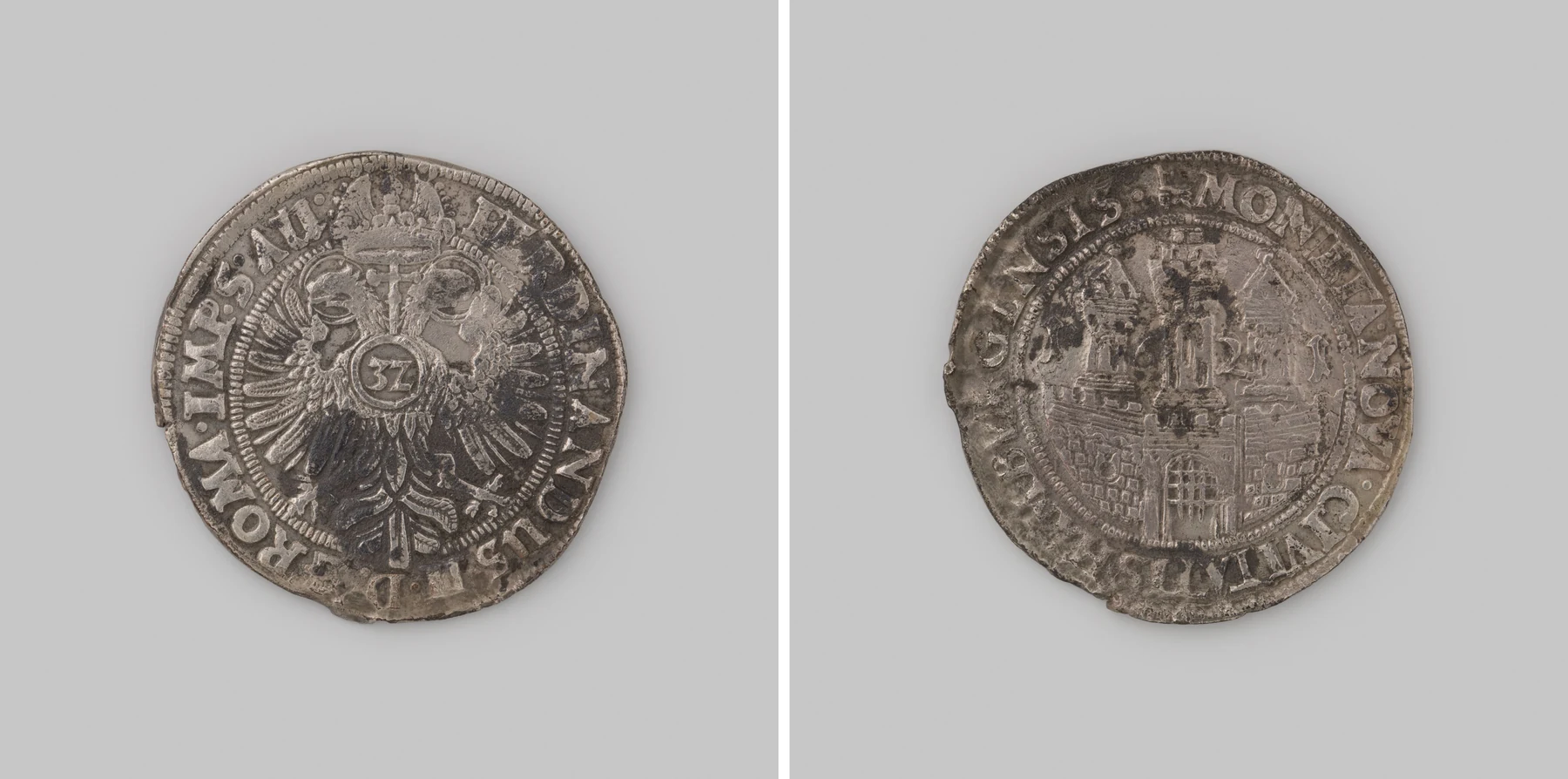
The lettering on the eagle side names Emperor Ferdinand II. The Rijksmuseum measures the taler at 4.2 centimeters across. Its uneven edge is part of how it looks today, but the outline alone doesn't tell us how or when it changed. The museum also keeps a small copper plaque recording the July 1965 presentation, two years after the wreck was located. The silver coin and the copper label document different centuries.
Two kinds of silver
The Batavia left Texel in 1628 on its first voyage for the Dutch East India Company, or VOC. Bound for the colonial port of Batavia in Java, now Jakarta, it struck Morning Reef in the Houtman Abrolhos Islands on June 4, 1629. Many passengers and crew reached nearby islands. Many survivors were subsequently killed in the violence that followed. Commander Francisco Pelsaert returned with a rescue vessel in September. Western Australian Museum wreck history
The ship carried twelve chests of coins as well as Pelsaert’s consignment of silverware. Coins could pay for goods; a finely made vessel was itself something to sell. Pelsaert commissioned Amsterdam silversmiths to make items for the Mughal Indian market. The fragments include parts of vessels, tableware and furniture ornaments. They weren’t necessarily made for a Dutch table. Western Australian Museum silver research
One of the finds is an ewer made in 1628, a silver pitcher for pouring water over someone’s hands. In one of the engraved scenes on its side, a servant carries an ewer. In another a servant offers a covered bowl. The pitcher bears a picture of the service it was made to perform. Museum audio guide · Excavation report, figure 53
What the divers brought up
Wind and surf kept the divers from the wreck for days at a time. On November 12, the weather eased enough to send out the small boat again. The divers brought back two silver dishes and a carpenter’s chest. The next day the ship’s council recorded ten of the twelve money chests recovered. The museum identifies the divers who worked for Pelsaert as men from Gujarat. They, not the commander whose account survived, went into the water. Pelsaert’s journal, translated, pp. 74–75 · Museum account of the divers
There is no reason to assign the Amsterdam taler to a particular chest. And it wasn’t the only kind of silver coin aboard. The WA Museum catalogs a West Friesland rijksdaalder dated about 1593–99, found in 1970. It is BAT6021, not the Hamburg coin shown here. Shared provenance doesn't make two coins interchangeable.
A clue in a painting
Coins were made to be recognized. A piece of a vessel foot is harder to read. Salt water and moving sediment left parts of the silverware bent, corroded and broken. Conservators in the 1970s sometimes joined or reshaped pieces so they could be displayed. The museum shows one piece, BAT3563, before and after that work. The difference is a reminder that what we see today isn’t necessarily the shape the divers first saw. Museum photographs and research
In a separate case, researchers determined that pieces previously interpreted apart belonged together as the foot of a vessel called a katel. For a comparison they turned to a painting of Shah Jahan and his son Dara Shikoh by Nanha, now at the Met. The painting helps explain the form. It doesn’t show the actual vessel that went down with the ship.
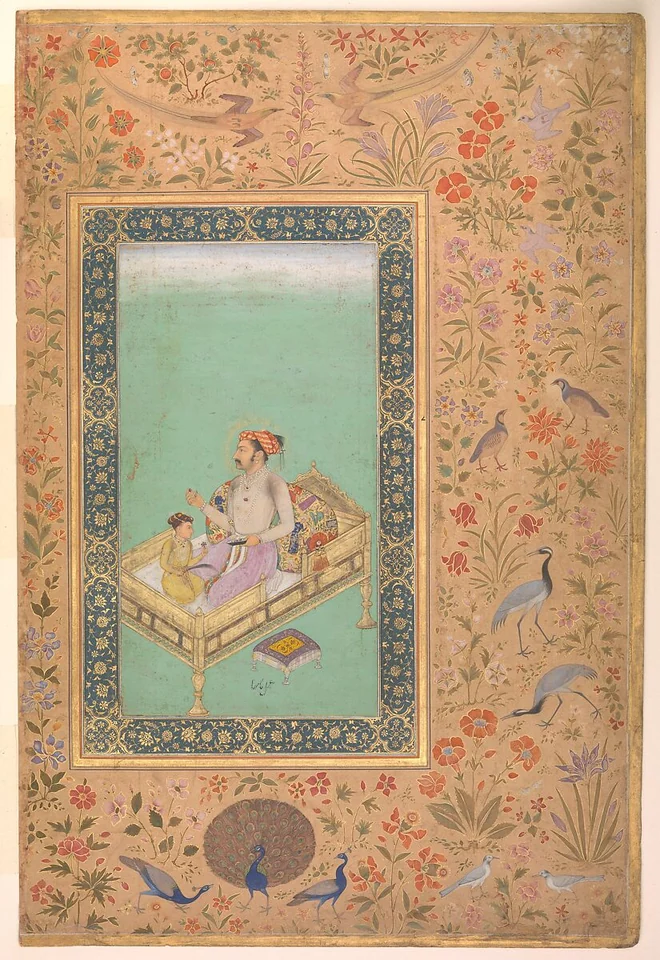
That’s what makes the two survivors worth looking at together. The taler carries a name and a city stamped into its faces. The fragments needed a comparison from a different collection, made for a world in which a vessel like that still had a use.
Follow the wreck ashore
The research informed displays at the WA Shipwrecks Museum in Fremantle / Walyalup, including interactive 3D renderings. The Museum of Geraldton / Jambinu places the Batavia beside three other Dutch wrecks in its Shipwrecks Gallery. Neither stop is a promise that a particular numbered coin is on view.
For another coin that survived far from home, follow the Prague groschen found beneath Berlin’s town hall. Or look at a Mughal pomander opened and closed to see how two views can help make sense of an object’s form.