
Start with what the record actually says
A silver mirror can be two different things. It can be a mirror with a silver mount, or one with a thin silver coating that does the reflecting. In a listing, those are often compressed into the same two words. Before paying for an attribution, ask which part of the object the seller is describing.
The Metropolitan Museum of Art dates this oval hand mirror to London, 1874–75. It records the materials as silver and glass without identifying the reflective backing. The record for a second Met mirror in a Jenner & Knewstub traveling case likewise does not establish the backing. Contrast those with the Museum of Fine Arts, Houston’s Thomas Fentham looking glass, around 1800, whose record explicitly lists mercury and tin. The records are answering different questions. Nothing about the shine of the first two photographs fills in what their catalogs leave out.
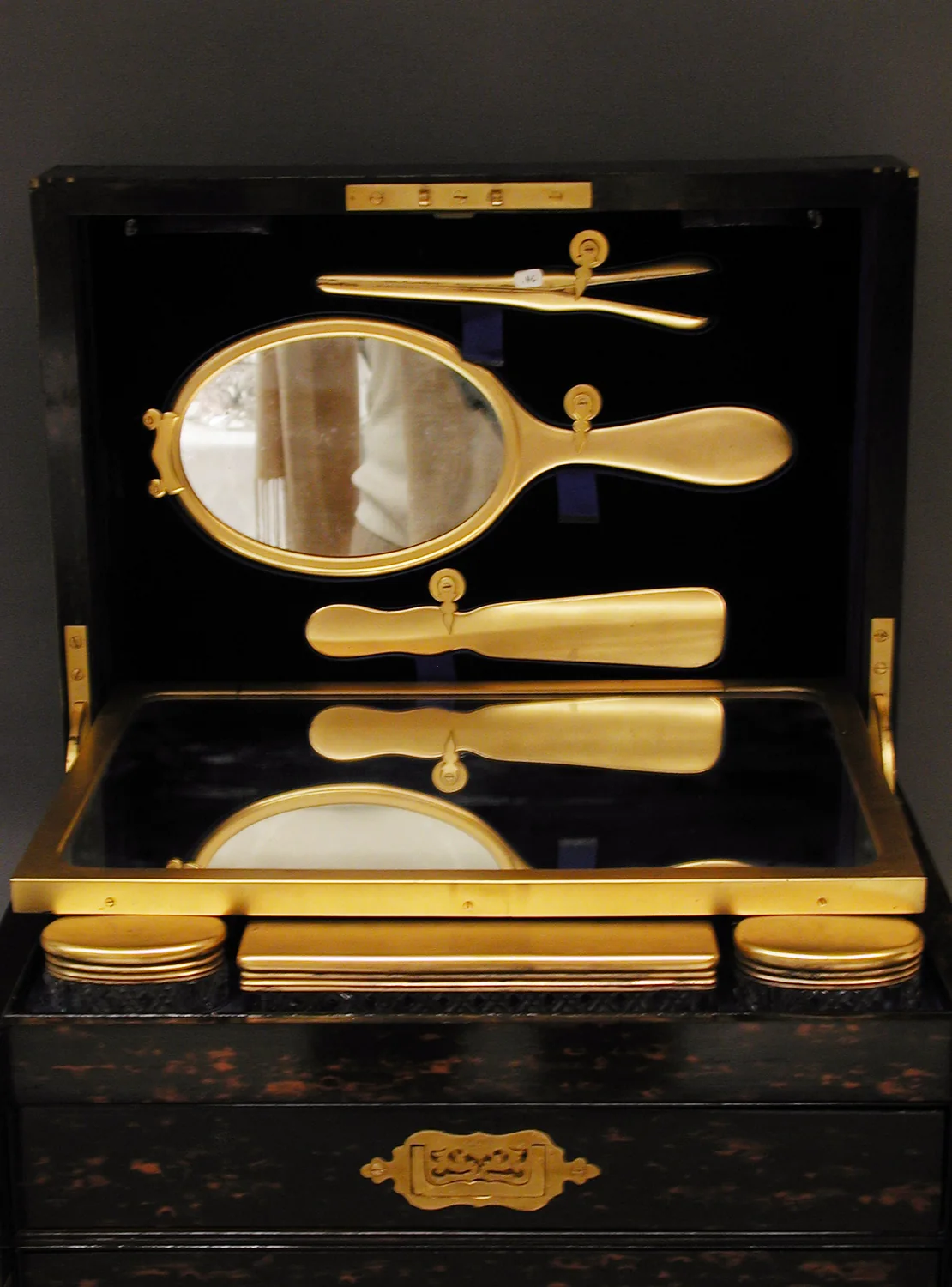
Ask three separate questions
How old is the mount? A dated maker’s label, an original receipt, or a readable hallmark may help establish the history of the frame or handle. It does not date the plate by itself. In a fitted case, even the case and its tools may not have spent their whole lives together.
Is the glass original to the mount? Ask whether a restoration invoice, earlier photograph, or collection record tracks that particular plate. A note saying “mirror restored” might mean the frame was repaired, the glass rebacked, or the plate replaced. Ask what work was actually recorded. If it isn't known, “old mount; plate undated” is a better description than “all original.”
Does the record name the reflective layer? An invoice that explicitly documents a replacement silvered plate tells you more about the present mirror than the age of the frame does. Conversely, a catalog that calls a hand mirror “sterling” may be talking only about the silverwork. If a seller cannot point to records or a specialist examination, write “reflective backing not identified.” That is a useful answer, not a failure to identify the object.
Don't turn appearances into a test
Some amalgam mirrors look gray, and some old plates show spots, fading or a softened reflection. Those are descriptions, not reliable diagnoses. Wear, deteriorating coatings, glass defects, later silvering and changes in lighting can complicate what you see. A bevel or a painted back does not settle the question either. Nineteenth-century workshops used more than one method, and a mirror could be altered long after its frame was made.
Even a specialist’s instrument has limits. In one test on an actively dripping mirror, Winterthur conservators reported that X-ray fluorescence through the front of the glass detected tin but missed mercury. Tin was a clue, not proof; the negative mercury reading did not rule mercury out. This is not a test to try at home.
When to stop looking
Do not lift the back, scrape at a coating, or move a suspect mirror to look for clues. The National Park Service's museum care guide refers unstable mirrors to a conservator. If you notice droplets or loose material, leave it undisturbed, keep people and pets away, and ask a local environmental health agency for mercury-specific advice. For an intact piece with missing documentation, a conservator can help decide whether identification is necessary at all.
“Mercury glass” can mean something else
Collectors also use “mercury glass” for decorative silvered glass. The Met's Boston Silver Glass Company jug is an example with a silver coating between two glass walls. That is different from a tin-mercury backing on a looking glass. The nickname is not evidence for what is behind your mirror, or an assurance about how to handle it.
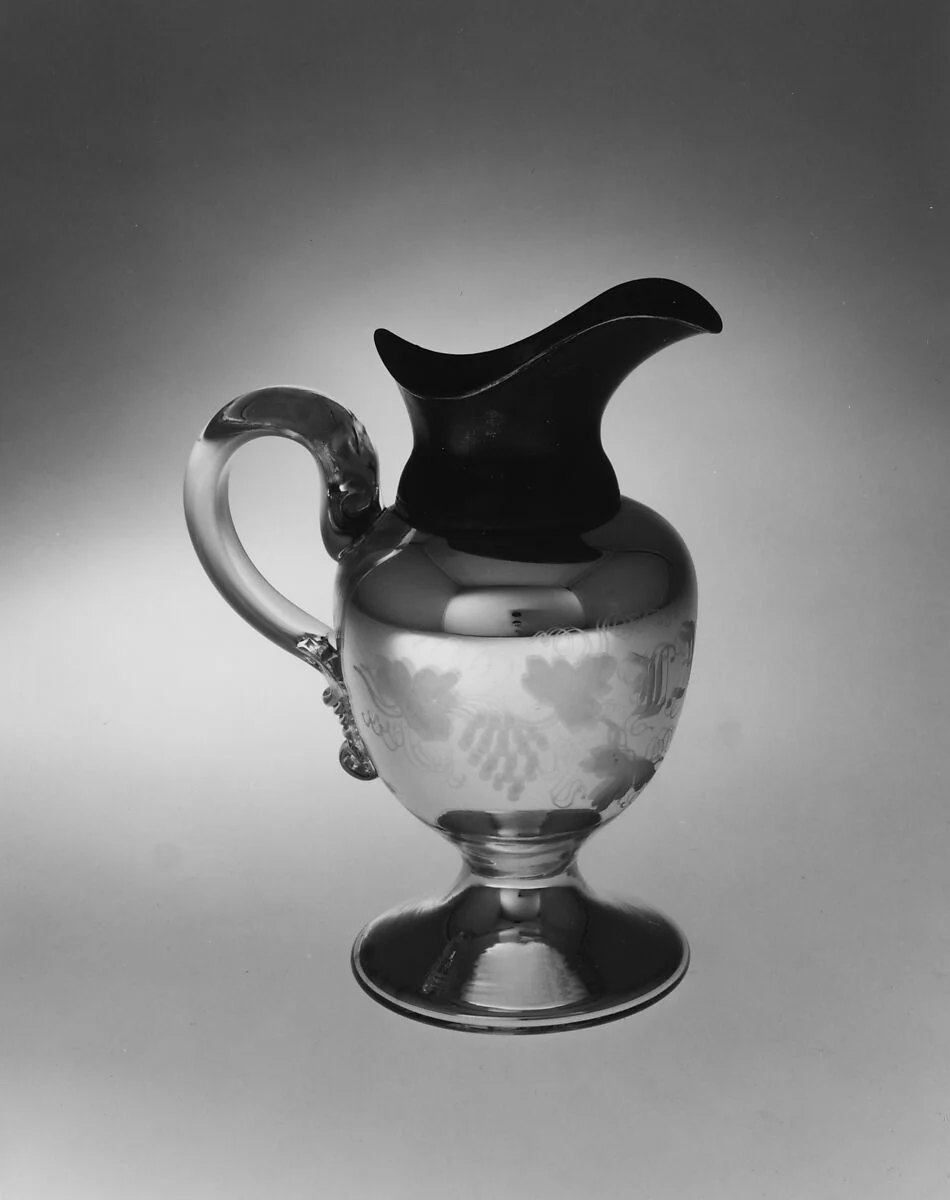
The distinction is worth keeping in your collection notes: the mirror’s frame tells one story, the plate another. Read how that split took silver from a dressing case to a telescope.
Why the silver on a telescope mirror went in front of its glass instead.