
An unexpected job for silver
Silver has helped protect cut flowers from an invisible threat: ethylene, a gas that can speed the decline of susceptible blooms. In commercial postharvest handling, silver thiosulfate, usually shortened to STS, has been used to reduce the damage caused by that signal. The interesting part is the silver’s effect on plant physiology, far removed from its familiar role in jewelry or coins.
Ethylene is produced naturally by plant material and also comes from sources such as engine exhaust. In sensitive flowers, exposure can bring on premature aging, dropped petals or failed buds. A flower can therefore suffer even when its stem still has access to water.
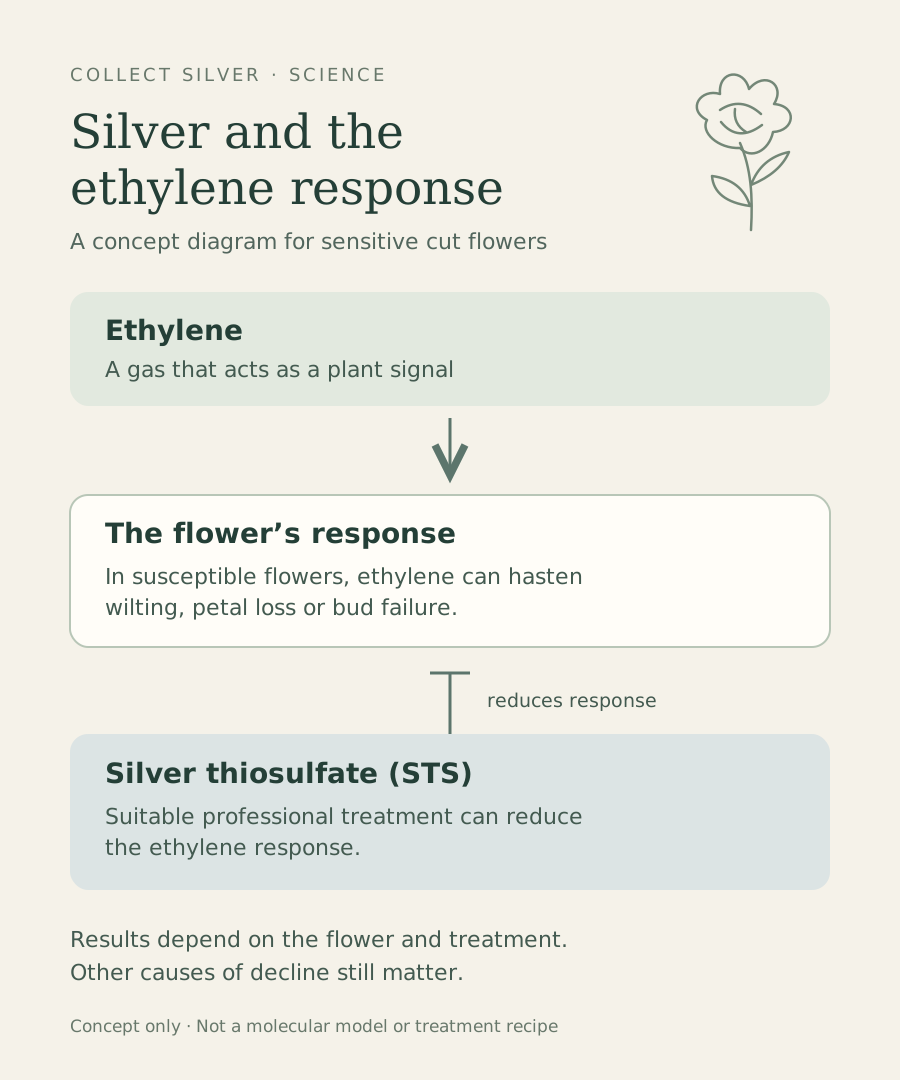
Changing the response to a plant signal
STS is a silver-containing chemical treatment, rather than a piece of metallic silver placed beside a flower. Its anti-ethylene effect can reduce a susceptible flower’s response to a signal that would otherwise hasten its decline.
Research on the model plant Arabidopsis connects silver’s effects with ethylene receptors, the proteins involved in sensing the gas. The mechanism is subtler than plugging a hole: experiments show that an ethylene receptor can still bind ethylene with silver present while the plant’s response is inhibited. Silver can interfere with the response to ethylene, not simply remove the gas from the air.
Carnations show both the promise and the limits
A 1979 study by H. Veen reported that STS pretreatment made cut carnations insensitive to an ethylene treatment and delayed wilting. That is direct experimental evidence for the application, rather than a conclusion drawn from silver’s reputation as an antimicrobial material.
But “flowers” is a very broad category. UC Davis describes differences in ethylene sensitivity among carnation cultivars. It also notes that spray carnations do not always respond well to STS because flowers at different stages of maturity take up the solution unequally. Even within one familiar flower, treatment results depend on the plant and its condition.
Those qualifications matter more than a headline promising extra days. A result obtained with particular carnations under experimental conditions cannot establish how long every mixed bouquet will last.
One part of professional flower care
Professional growers have more than one way to protect ethylene-sensitive flowers. NC State Extension’s 2024 guide lists both STS and 1-methylcyclopropene, or 1-MCP, as anti-ethylene agents.
Ethylene protection addresses only part of the problem. Water stress, unsuitable temperatures and microbial contamination also affect flower quality. Anti-ethylene treatment cannot substitute for good handling, and the evidence does not show that a silver vase or a coin in the water reproduces a professional STS treatment.
A useful application with responsibilities
Silver-containing treatment waste also deserves care. Oklahoma State University’s extension guidance flags silver pollution of soil and groundwater and discusses professional recovery. This is professional postharvest chemistry, not advice to add silver or mix treatment chemicals at home.
Silver’s contribution here is specific and remarkable: in suitable cut flowers, its chemistry can interrupt a signal associated with premature decline. Understanding that limited job makes the story more interesting than a universal promise to keep a bouquet fresh.
Sources & further reading
Sources reviewed .
- NC State Extension: Postharvest Information (updated August 27, 2024)
- Oklahoma State University Extension: The Care and Handling of Cut Flowers (2017)
- McDaniel and Binder: Ethylene Receptor 1 and inhibition of ethylene responses by silver (2012; abstract)
- Veen: Effects of silver on ethylene synthesis and action in cut carnations (1979; abstract)
- UC Davis: Carnation, Miniature Carnation (Michael S. Reid; updated October 2004)