
When the coin stops looking like a coin
A row of Persian silver coins can be the decoration on a piece of hair jewelry. But on another ornament in the same museum, ten coins are there and you would not see them from the front. They sit beneath gilded plaques, where their job is to support the ornament rather than show the coin.
The Metropolitan Museum of Art dates both Yomut dorsal plait ornaments to the late nineteenth or early twentieth century and attributes them to Central Asia or Iran. A dorsal ornament hangs behind the head or down the back. The two records are worth opening side by side. They show why the position of a coin matters at least as much as whether the museum lists one in the materials.
What the shape doesn’t tell you
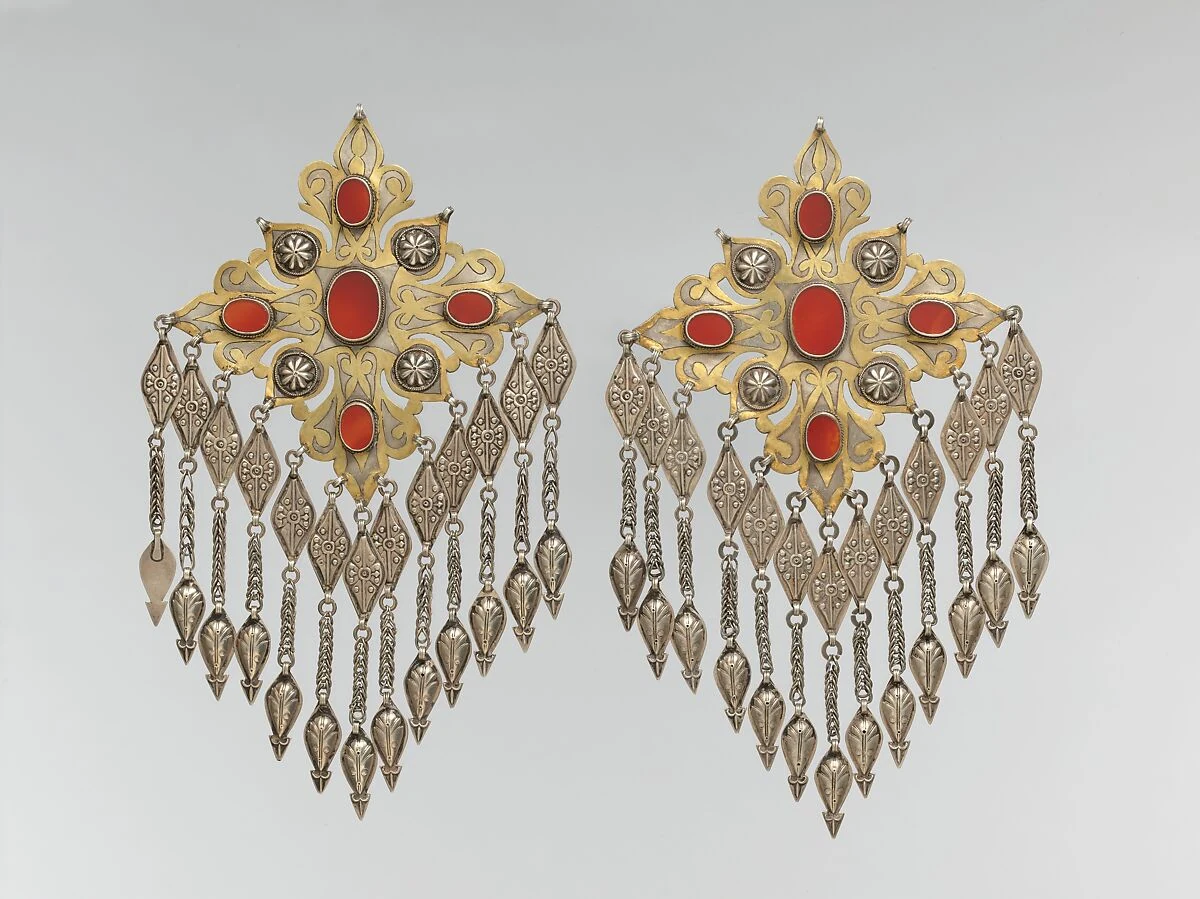
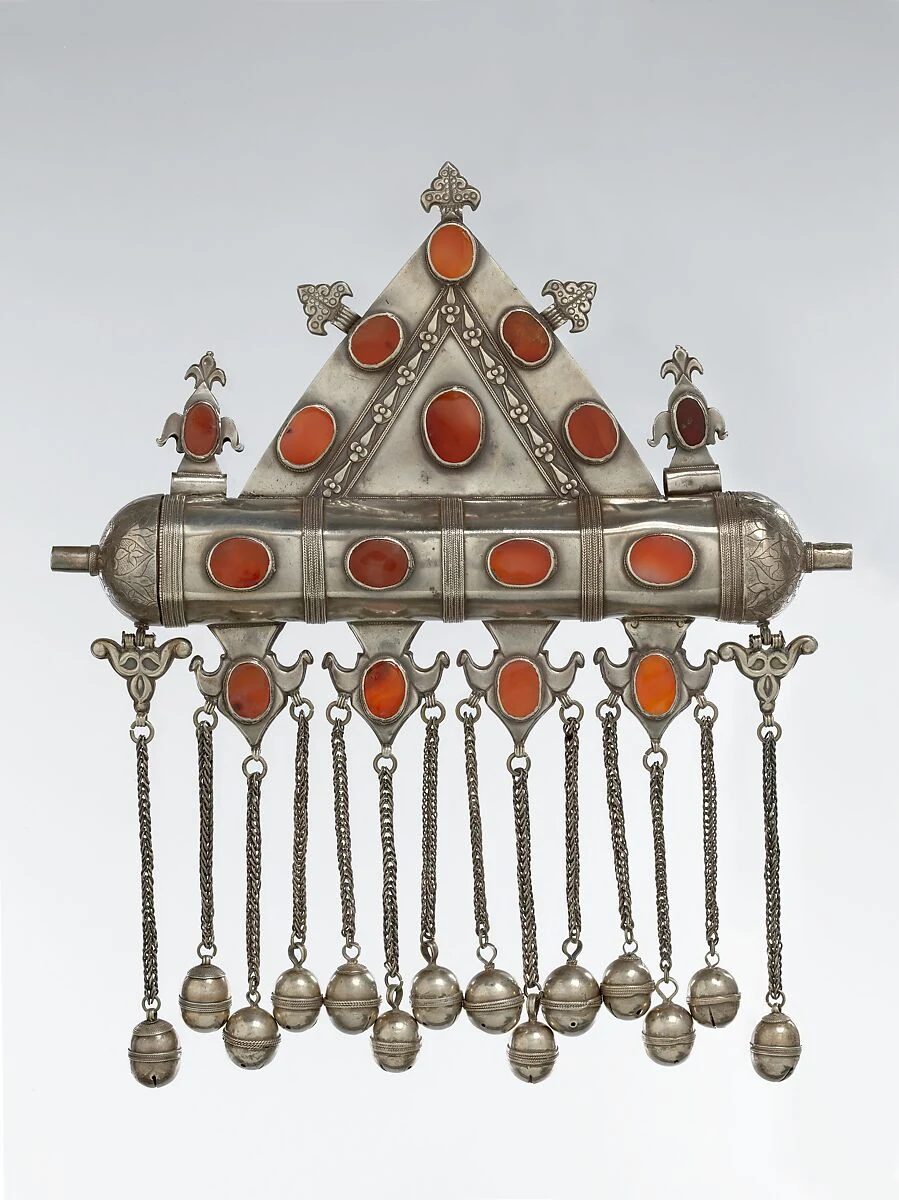
Two other pieces make a useful comparison. The Met identifies the two matching pieces as Teke pectoral ornaments, meaning chest ornaments. They have gilded, worked silver, red carnelians and hanging chains. The other is cataloged as a triangular amulet holder, with twisted wire chains, bells and carnelians. Neither photograph shows the Yomut hair ornaments just discussed. In its broader exhibition the Met notes that some holders could contain written prayers; this is not evidence of surviving text inside the particular holder pictured here.
If your piece has an old coin in it
Photograph the front, the back and the attachment point without bending or taking anything apart. Write down what you can actually see: a hole, a loop, a frame, a flattened edge, a soldered join or a separate plate. Then record a legible date and denomination separately from a proposed date for the jewelry. If you cannot see the back or a coin is suspected under another part, leave that as unknown and do not pull it open. That distinction can be more useful to the next person than an overconfident attribution.
For more objects identified by how they were worn, see the silver jewelry directory. The Jewelry History & Makers guide connects materials and methods to makers and places.