
Before the Giant Fell: Five Scenes on Byzantine Silver
What is a biblical shepherd doing in a Byzantine court? Follow five silver plates from the same Cyprus discovery to the scene that brings the story together.
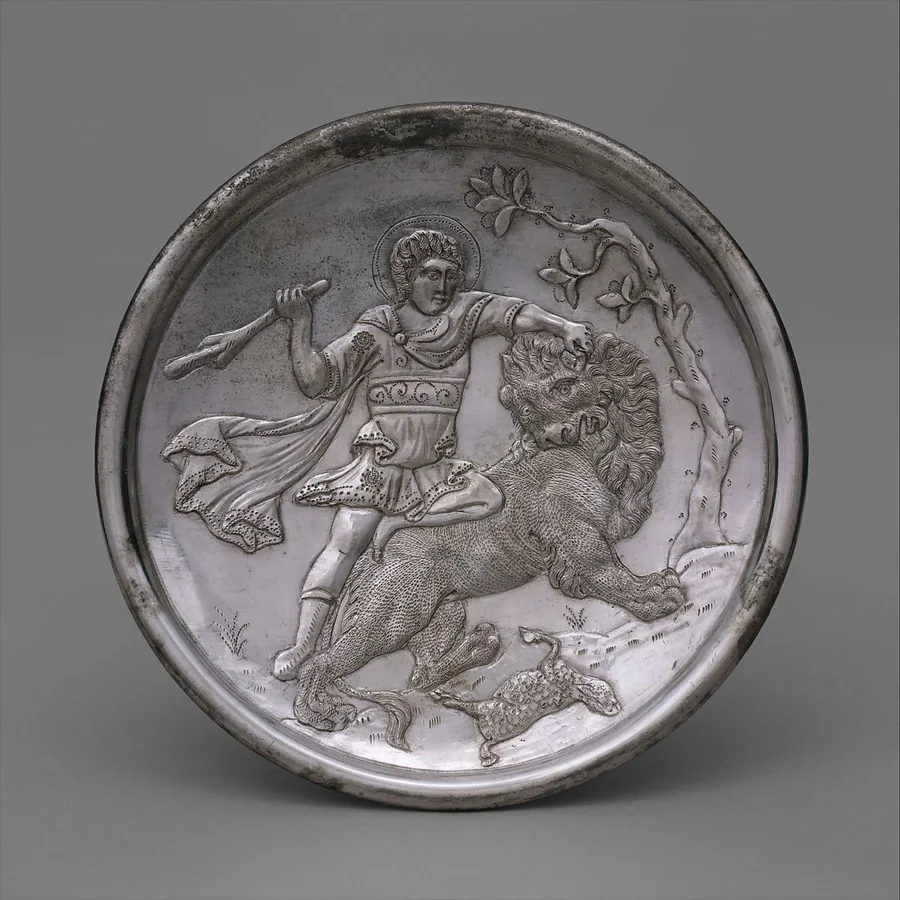
In 1902, nine silver plates turned up together at Karavas, near Lambousa on the north coast of Cyprus. The story on them is ancient, but its characters dress like people at a seventh-century court. Why tell it that way?
The Met dates the plates featured here to 629–630, made in Constantinople. Stamps on the backs of plates in the set place them in Emperor Herakleios’s reign. To read the fronts, start with a shepherd and follow the figures through five scenes.
The countdown
5 in the countdown
The shepherd is chosen
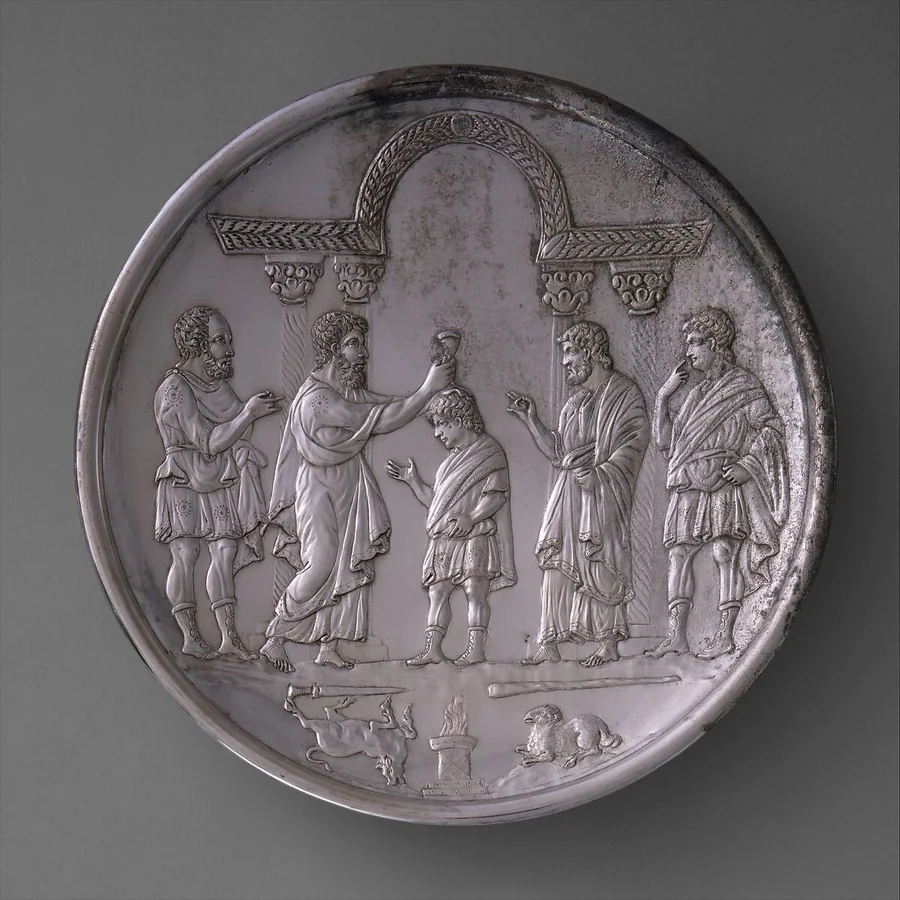
Samuel anoints David. The Metropolitan Museum of Art, Gift of J. Pierpont Morgan, 1917, 17.190.398. Public Domain. · Image credit and rights The anointing 1 Samuel 16:1–13
Look for the raised horn above David and the ram and staff below him. Samuel chooses a shepherd, not a soldier. The altar, calf and knife are reminders of the sacrifice that brought Samuel to Bethlehem. The figures above tell you who is there. The little objects below tell you why.
Museum record: The Met · 17.190.398
4 in the countdown
His own brother doubts him
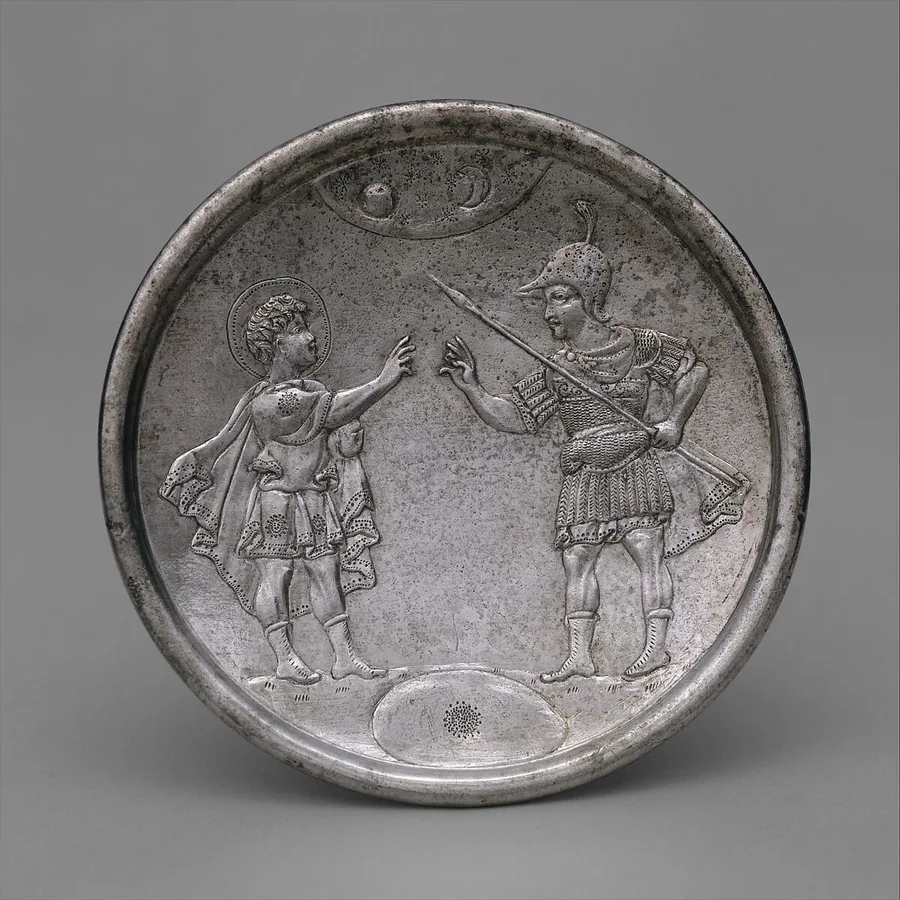
The scene The Met identifies as Eliab’s rebuke. The Metropolitan Museum of Art, Gift of J. Pierpont Morgan, 1917, 17.190.395. Public Domain. · Image credit and rights The rebuke 1 Samuel 17:28–30
The Met reads this compact scene as David’s eldest brother, Eliab, accusing him of abandoning his flock to watch the fighting. The identification is not certain. Read it in the sequence, though, and there is a useful reversal: the boy we have just seen being chosen is the one his family least expects to belong here.
Museum record: The Met · 17.190.395
3 in the countdown
The shepherd volunteers
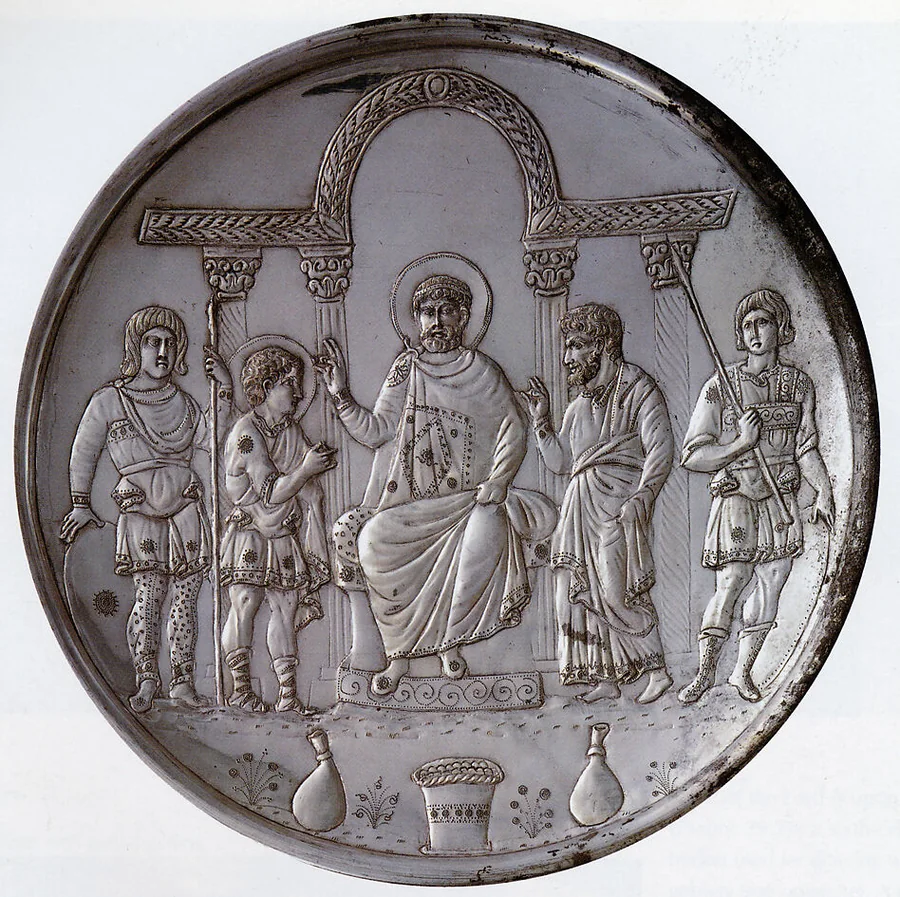
David is presented to Saul. The Metropolitan Museum of Art, Gift of J. Pierpont Morgan, 1917, 17.190.397. Public Domain. · Image credit and rights Before Saul 1 Samuel 17:32–34
In The Met’s reading, David stands before Saul and offers to face Goliath. Look at the ruler’s cloak: a cross-shaped brooch fastens it and a rectangular panel indicates rank. Those are cues from the makers’ own court, not eyewitness details from biblical antiquity. Scholars have proposed other moments in David’s audience with Saul for this scene.
Museum record: The Met · 17.190.397
2 in the countdown
They dress him as a soldier
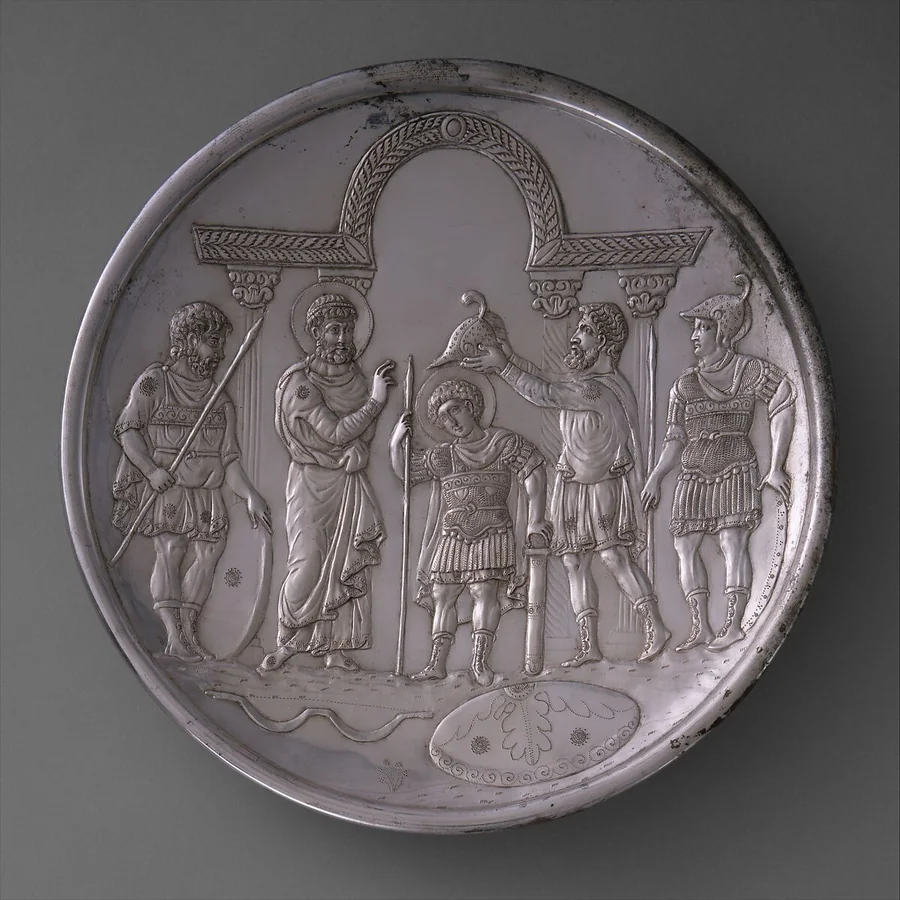
David receives armor for the battle. The Metropolitan Museum of Art, Gift of J. Pierpont Morgan, 1917, 17.190.399. Public Domain. · Image credit and rights The armor 1 Samuel 17:38–40
David stands in a Roman-style breastplate beneath a curved lintel, a form that could signal an emperor’s presence in this period’s art. The armor is right there on silver; David’s decision to take it off before the fight comes from the text. You are seeing both a young fighter being equipped and, in The Met’s reading, a visual hint at the king he will become.
Museum record: The Met · 17.190.399
The grand finale
1 in the countdown
One platter, three moments
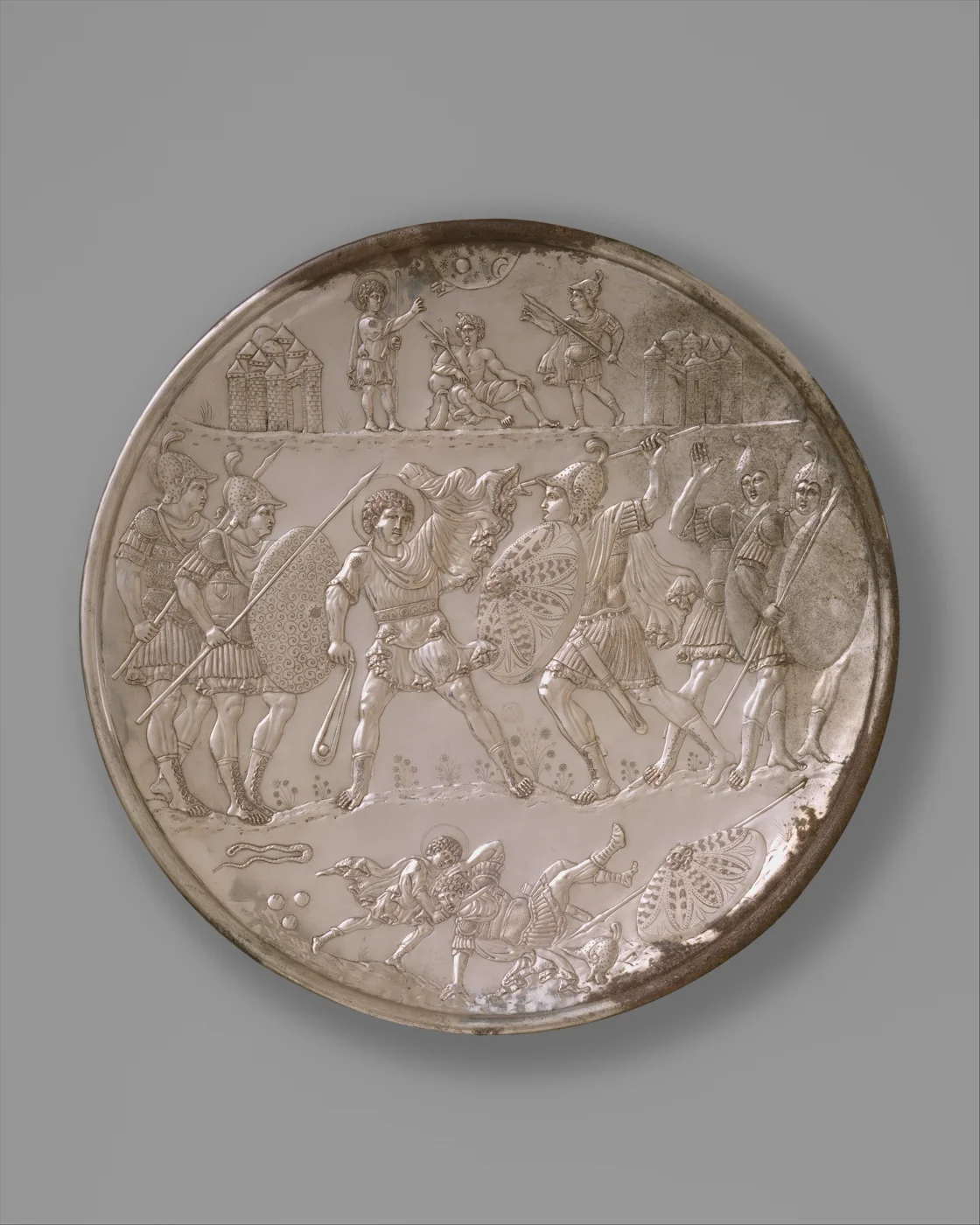
The largest plate in the set tells the battle in three scenes. The Metropolitan Museum of Art, Gift of J. Pierpont Morgan, 1917, 17.190.396. Public Domain. · Image credit and rights 49.4 cm across 5,780 g total weight
Read the largest plate in the set from top to bottom. Between David and Goliath at the top, a personification of the river recalls where David found his sling stones. The center holds the fight and the soldiers’ retreat; the bottom shows David after victory. The artists made an old story speak in the visual language of their own age. Was David meant to evoke Herakleios after his war with Persia? That is a scholarly reading, not proof that the emperor ordered the plates.
Museum record: The Met · 17.190.396
You’ve reached number one.
Back to the JournalHow the scenes are ordered
Five selected plates are shown in the order of their likely episodes in 1 Samuel, not by size, value or date of production. Six plates from the nine-piece set are at The Met and three are at the Cyprus Museum. Neither this countdown nor the order of scenes establishes how the dishes were originally arranged.
The courtly clothing and period stamps connect the objects to Byzantium. They do not tell us who commissioned the silver or why it was hidden. Some scene identifications, and the proposed connection to Herakleios’s victories, remain interpretations.