
Two teapots, three descriptions
Look at two British teapots in the Met’s collection and you might describe either as silver-colored. Put their catalog labels side by side, and one word does most of the work. The Met’s tiny David Willaume teapot is Britannia-standard silver. Its James Dixon & Sons teapot is Britannia metal. The first name describes the fineness of a silver alloy. The second describes a tin-based material. A third description you might meet on a piece, EPBM, means a silver coating on that tin-based alloy.
An easy way to keep them straight: Britannia silver is a silver standard; Britannia metal is a base alloy; EPBM describes a plated construction. None of those labels should be read as the weight of silver in the object.
The little pot with the higher silver standard
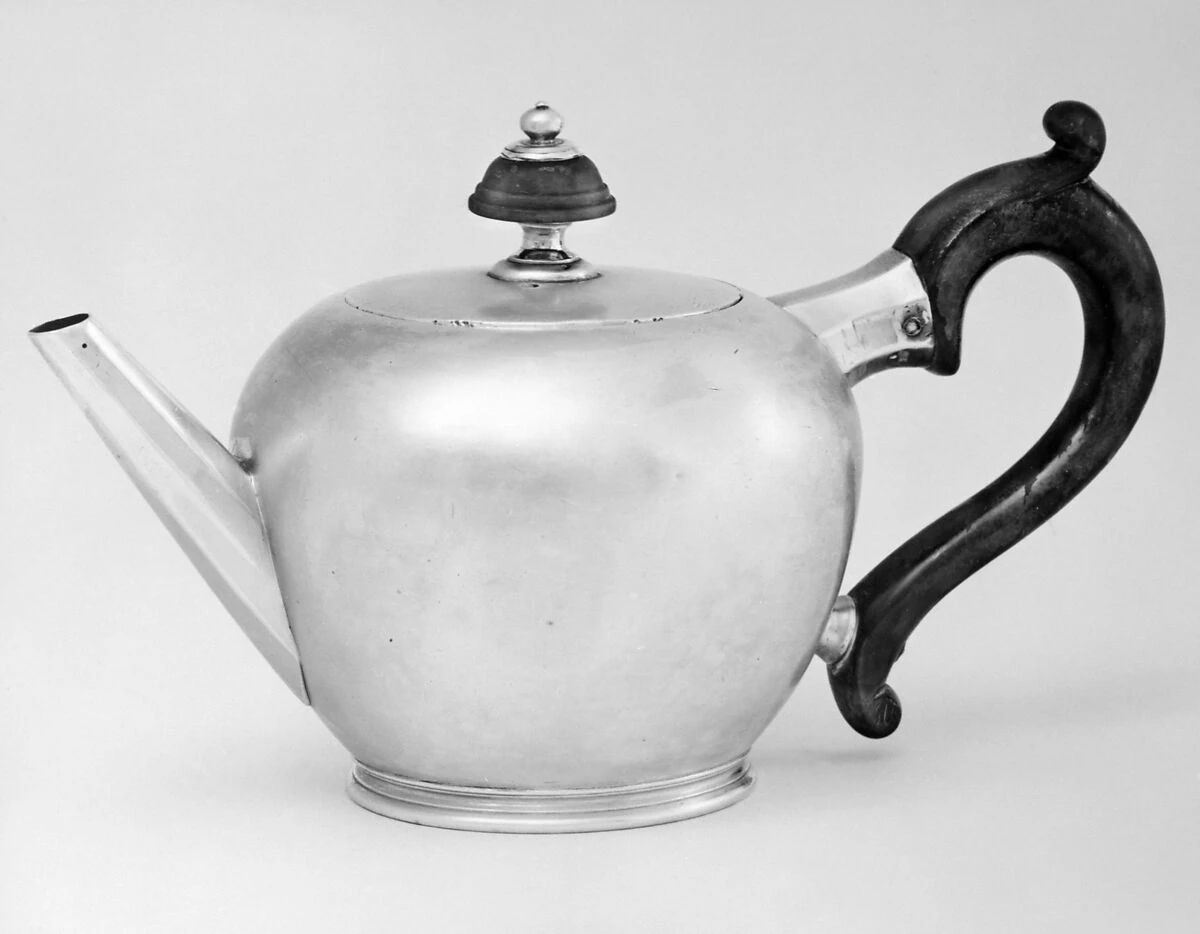
David Willaume I’s teapot is only 3½ inches high. The Met dates it to London, 1718–19, and records silver and wood. Its older Untermyer catalog identifies the silver as Britannia standard and records Willaume’s WI mark on the body and on the cover. That last detail matters to a collector: a lid is a separate part. It has its own evidence, and a mark found on one part need not describe every part in a set.
The standard tells a story about coins, not just teapots. The London Assay Office explains that in 1697, when coin was being melted to meet demand for silverware, the standard for plate was raised to 95.84% silver. The higher standard for silverware came with a different group of marks, including a seated Britannia figure. Sterling returned as an allowed standard in 1720, and Britannia remained an alternative. The modern numerical mark for that higher standard is 958; ordinary sterling is 925. Neither number tells you how much a wood component or other non-silver part contributes to the weight.
The Sheffield pot with a different Britannia
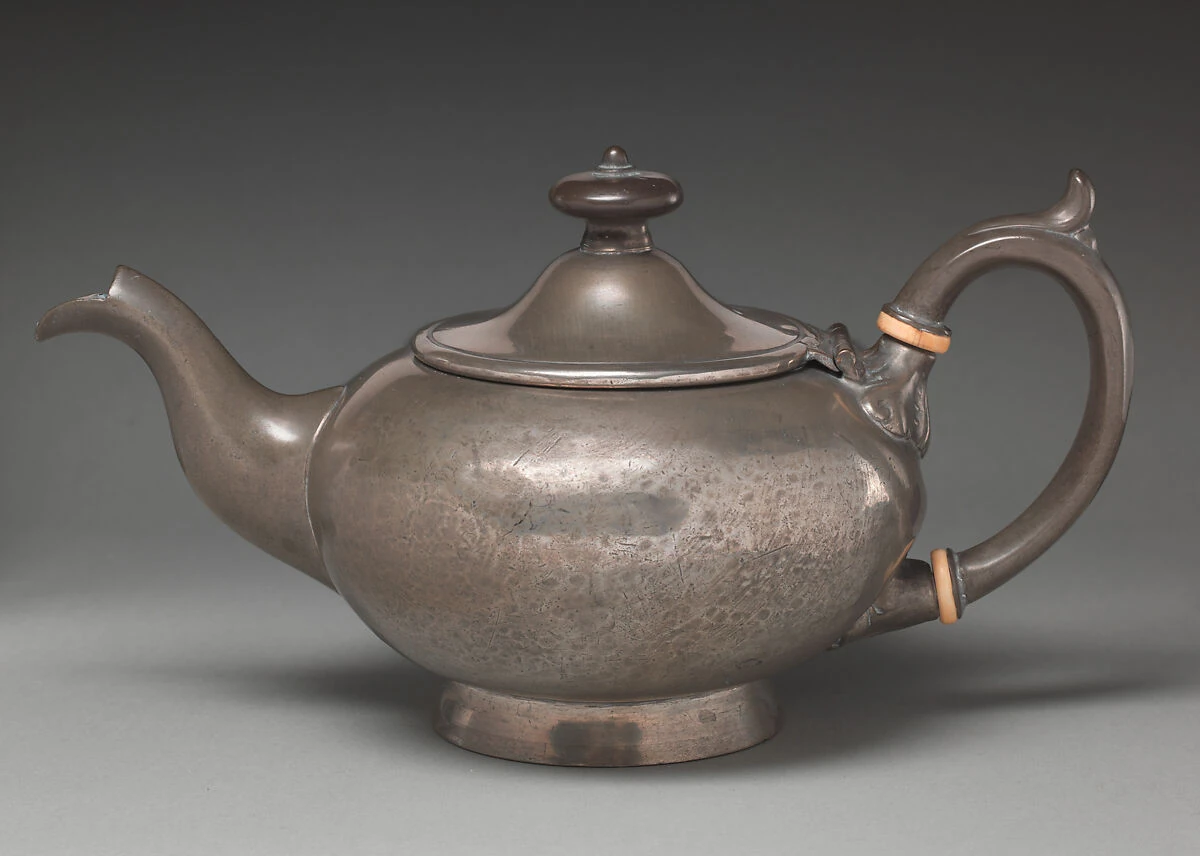
The James Dixon & Sons teapot is from Sheffield and dates to about 1842–51. Its Met record gives the material as Britannia metal and bone, and classifies it as base-metal work. Britannia metal is a tin-based alloy, commonly containing antimony; recipes varied. A bright surface isn’t evidence that the body meets a silver standard. The Met does not call this particular teapot electroplated, so don’t use its image to identify an EPBM example.
On a different object, an EPBM stamp describes silver electroplated over Britannia metal. The neighboring abbreviation EPNS describes a different base, nickel silver. Neither mark says the object is solid silver. And neither abbreviation says how much silver the plating contains or what might be under it beyond the named substrate.
What to do when your label just says Britannia
First, copy the whole label or mark. Is it a group of hallmarks, a word in a listing, or a stamp that includes EPBM? A bare word in a seller’s description is not the same evidence as a documented hallmark. If you find a number, record it with the surrounding symbols and which part carries it. If the lid lifts normally, look for its own marks too. A photograph of the overall pot, another of the entire mark group and a close-up of the clearest punch are more useful than trying to identify an alloy from shine. If the evidence doesn’t settle it, leave the metal uncertain instead of pricing the gross weight as silver.
For the next step, compare how silver tea sets are made and how to identify solid silver, plate and weighted construction.