
The stamp under the prize
An engraved fire wagon decorates the front of a tall silver-colored cup. The inscription records a New Bedford competition on July 4, 1895. Turn the cup over and, according to the museum, you’ll find a very different set of information: Pairpoint’s name, “Quadruple Plate,” and the number 3311. The date honors the competition. The words on the base describe the maker’s plated ware. They are not a silver fineness such as 925.
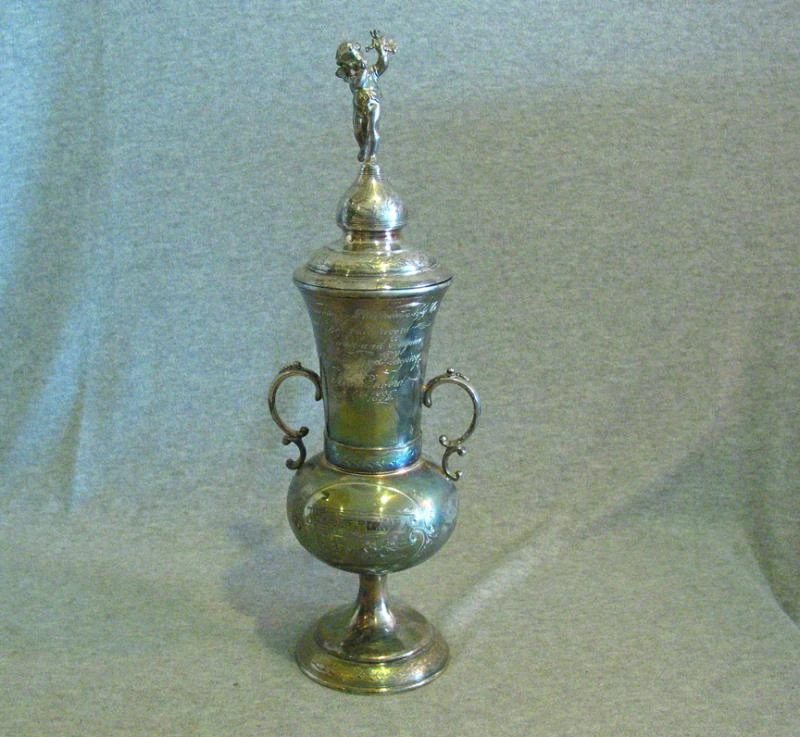
What quadruple promised
“Quadruple Plate” is historical silverplate wording, not a sterling mark or a percentage of silver. The Federal Trade Commission’s 1927 report describes a case against Benedict Manufacturing Co. The commission charged that the words led buyers to think Benedict’s ware had been plated four times. The report records a July 1926 order to cease and desist after a stipulation instead of testimony. In the separate White Silver Co. case, the commission described the impression as four applications or four times the coating thickness. Neither case is about this Pairpoint cup.
The dispute is a useful caution for a collector. Those cases show why the label and the measurement are two different things. A genuine old stamp gives you neither the original thickness in microns nor how much silver remains after polishing and wear. Not all makers or products can be treated as one recipe.
Same plate wording, different object
A late nineteenth-century Pairpoint mug in the same museum has an etched floral design and a twisted handle. Its underside again says Quadruple Plate, but the catalog records a different number, 433, and a P within a diamond. Record numbers like 3311 and 433 as part of each complete mark. Don’t use them as a date, weight or fineness without independent evidence.
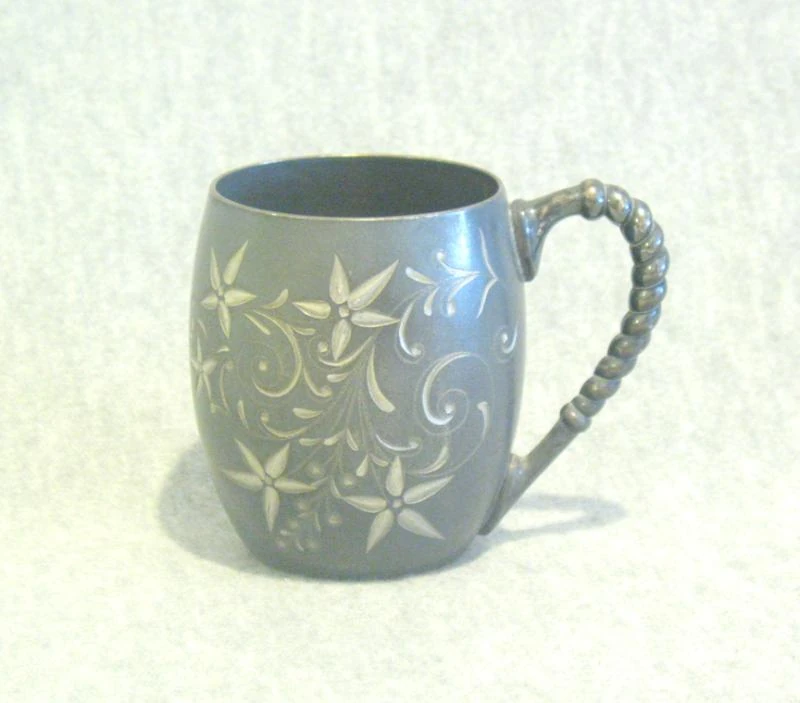
Reading your own piece
Before cleaning, photograph the whole thing, every stamp nearby and the edges or raised places where it’s worn. Copy “Quadruple Plate” separately from the maker or brand, the digits and any dedication. If the piece matters as a family or local-history object, keep those inscriptions and provenance notes regardless of its metal. If selling, describe the observed mark and construction as silverplate; don’t call it sterling or claim a silver weight from an overall scale reading.
Compare other sterling and silverplate marks. The silver care guide explains why a plated surface needs particular care.