
More solar, less silver
Two 2025 estimates seem to point in opposite directions. The IEA Photovoltaic Power Systems Programme puts worldwide additions of solar photovoltaic capacity at about 690 gigawatts, up 15% from 2024. In the World Silver Survey 2026, research firm Metals Focus estimates that photovoltaic manufacturers’ silver demand fell from 197.5 to 186.6 million troy ounces, about 6%.
Fewer ounces did not mean fewer gigawatts went into service. Silver gets added when a cell is made. A new installation may use modules made or shipped in an earlier period. And the amount of silver used in a cell can change with the design.
Three measures, three points in the supply chain
| Measure | What it counts | What the 2025 sources say |
|---|---|---|
| Photovoltaic silver fabrication demand | Silver attributed to making PV products, in million troy ounces | 186.6 million troy ounces, down about 6%, Metals Focus |
| Solar module shipments | The rated capacity, in gigawatts, of modules sent out during the year | Broadly flat versus 2024, VDMA’s 17th ITRPV roadmap |
| New solar installations | The rated capacity, in gigawatts, of systems installed during the year | About 690 GW, up 15%, IEA PVPS |
VDMA roadmap summary. Installed capacity is not the same as electricity generated, and 690 GW is the addition for one year, not the sum of all solar systems already installed. Adding a module to a project and making the cell inside it are different events. Dividing the survey’s ounces by the IEA’s gigawatts would not tell you how much silver a new factory-made cell contains. You’d need figures tied to the same production and product mix.
Follow the lines on a cell
At the front of many solar cells, fine conducting lines collect current and feed it toward larger conductors. You can see one junction in the close-up below. The U.S. Department of Energy identifies silver as the common metal for photovoltaic contacts. A change in the amount of metal used in those contacts can affect demand without changing how many projects are built.
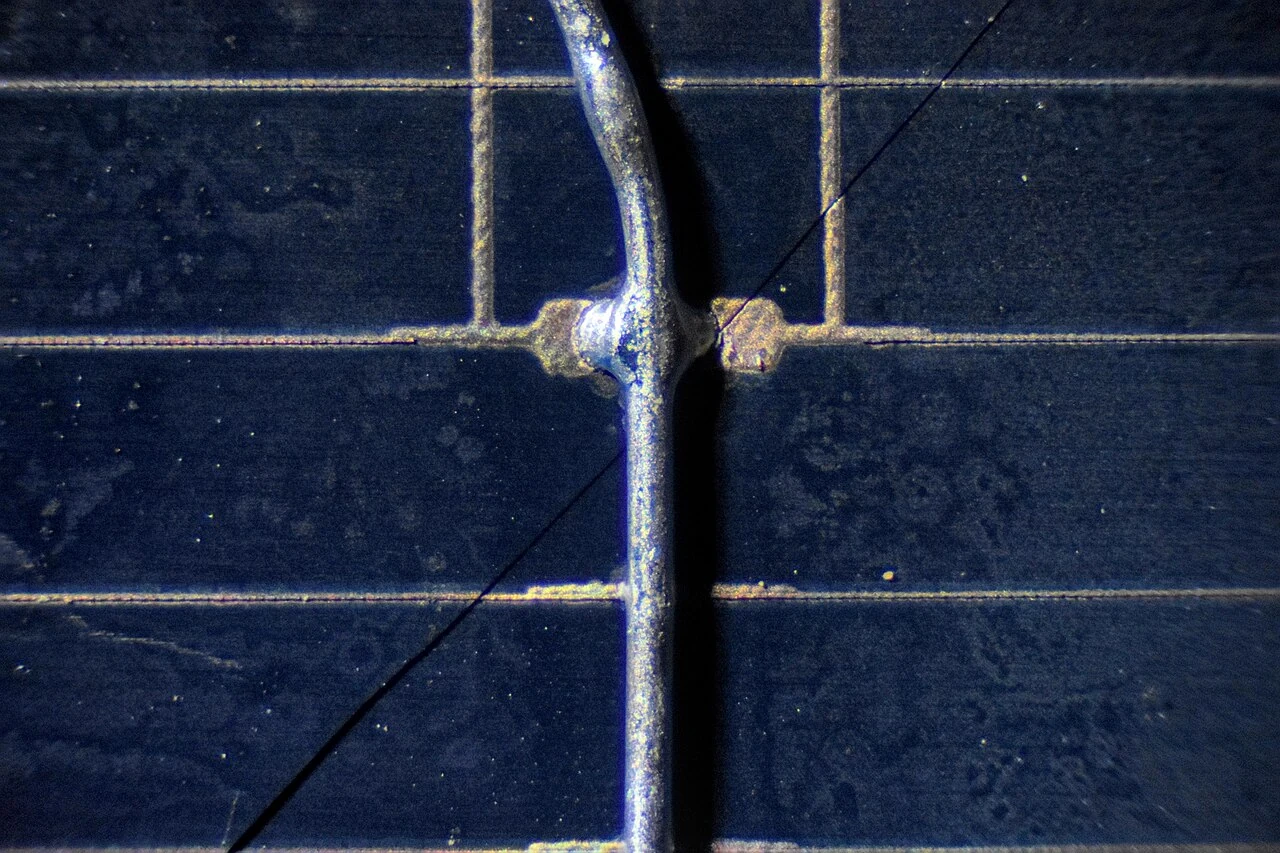
Metals Focus points to both using less silver and replacing some of it. Narrower printed lines can use less paste. Some manufacturers adopted silver-coated copper in parts of the cell, substituting copper for a portion of the silver without eliminating silver from the design. These are examples from the survey, not changes that every manufacturer made or conclusions about the pictured cell.
What to watch next
The November 12, 2026 Silver Institute update expected further weakness in solar silver use, citing reduced silver use in cells, substitution and installations below expectations. That is a 2026 forecast, not an outcome for the full year. The completed-year estimates above answer a narrower question: what changed from 2024 to 2025.
The Silver Institute listed photovoltaics among the topics for its December 4, 2026 conference program. For the bigger picture, see where the world's silver goes in a year. For what happens after a panel comes out of service, start with how silver returns through recycling. Manufacturing demand and eventual recovery are separate again.